Have you ever found a car online that seemed perfect, only to wonder whether the seller was telling the truth about its condition? This uncertainty is one reason choosing the right car dealers in Nigeria deserves careful attention. A beautiful exterior, an attractive price, and convincing photographs do not necessarily mean a vehicle is mechanically sound or legally ready for transfer.
The risks can be even more frustrating when you have worked hard to save for the purchase. Hidden engine problems, inconsistent mileage, questionable ownership records, and unexpected charges can turn an exciting milestone into a financial burden. Before paying any dealer, you need to inspect the car, verify its documents, research the seller, and establish the complete cost of ownership.
Thankfully, finding a suitable car does not have to be a guessing game. At AFRIKARS, we are committed to ensuring our audience gets the right knowledge in order to reduce costly mistakes when trying to purchase cars. Hence, beyond our marketplace that offers cars listed by U.S. dealers and support with sourcing and importing vehicles into Nigeria, our team has put together this article to guide buyers.
In this post, you'll learn how to find a trusted car dealer, compare buying costs, verify essential documents, and protect yourself from scams.
Finding trusted car dealers in Nigeria can make the difference between buying a vehicle that serves you well and spending extra money fixing hidden problems. Whether you want a brand-new car, a foreign-used (Tokunbo) vehicle, or a Nigerian-used car, you need a dealer who provides accurate information, verifiable documents, and clear payment terms.
You can find car dealers in Nigeria through these channels:
- Vehicle import and sourcing platforms: If you prefer to source a car from abroad, consider platforms that help you explore overseas inventory and understand the cost of importing a vehicle. For example, AFRIKARS provides access to U.S. dealer and auction vehicles and displays estimated landed costs for vehicles delivered to Nigeria.
- Established automobile dealerships: If you want a brand-new vehicle, start with authorized dealerships. Confirm their current vehicle offerings and authorized-brand relationships directly before visiting.
- Used-car dealerships: You can find foreign-used and Nigerian-used cars at physical dealerships in major cities, including Lagos, Abuja, Port Harcourt, and other commercial centres. Visit the dealership, inspect the vehicle, and verify its documents before paying.
- Online car marketplaces: Online platforms let you compare cars for sale in Nigeria by make, model, year, mileage, condition, and advertised price. Ensure to treat each listing as a starting point for verification rather than proof that a seller or vehicle is trustworthy.
Before sending money to any car dealers in Nigeria, verify both the seller and the vehicle. A professional-looking website, an attractive showroom, or a convincing social media page cannot establish that a dealer owns the car or that the vehicle has clean documents.
Use these checks to reduce the risk of fraud and costly mistakes.
Ask for the dealer's full business name, physical address, official contact details, and relevant registration information. Where appropriate, check the business through the Corporate Affairs Commission's official channels. Visit the dealership if possible. If you cannot travel, request a live video call showing the premises and the actual vehicle. Ensure to also independently confirm the address and contact information rather than relying solely on details supplied in a message.
Arrange an independent inspection by a qualified mechanic. Ask the inspector to assess the engine, transmission, suspension, brakes, tyres, electrical systems, and signs of accident or flood damage. Do not depend entirely on the dealer's description or photographs. If you are buying remotely, request recent pictures and a live walkthrough, and consider hiring an independent vehicle inspector.
Request the vehicle identification number and compare it with the number displayed on the vehicle and recorded in its documents. Depending on the car, you may find the VIN near the windscreen, on the driver's door frame, or in other manufacturer-designated locations. You can make use of AFRIKARS free VIN Decoder here. Additionally, a mismatch, altered marking, or unexplained discrepancy is a serious warning sign. Stop the transaction until you can resolve it independently.
For a foreign-used car, ask for the relevant customs-clearance evidence and documents supporting ownership. For a Nigerian-used vehicle, review the registration documents and ownership history.
You can use official verification channels where available:
- FRSC National Vehicle Identification System: Check the registration details through the official website here.
- Nigeria Police Central Motor Registry Information System: Use the official portal where applicable to verify relevant vehicle records.
- Vehicle registration and customs records: Check the available services on the government's Vehicle Registration System and confirm any uncertain records with the relevant authority.
For an imported vehicle, especially one sourced from the United States, use the VIN to investigate available accident, title, mileage, and auction records. A VIN decoder can help confirm basic vehicle specifications, but it is not a complete vehicle-history report. If the car has a salvage title or a history of serious damage, investigate the nature of the damage, repair quality, and local registration eligibility before proceeding.
Before paying, obtain an invoice that identifies the seller, vehicle, agreed price, and any additional charges. Ask for written details about the deposit, balance, delivery date, refund policy, and conditions under which the transaction can be cancelled.
Likewise, use a traceable payment method and confirm that the recipient's account details match the dealer or the documented payment arrangement. Be cautious if the seller suddenly changes account details, demands payment to an unrelated individual, or pressures you to transfer money immediately.
Be especially careful if a dealer:
- Offers a price far below comparable vehicles without a convincing explanation.
- Refuses an independent inspection or document verification.
- Cannot explain discrepancies in the VIN or ownership records.
- Pressures you to pay before you see the car or receive the relevant paperwork.
- Makes unsupported promises about vehicle condition, customs clearance, or delivery.
- Avoids providing a written invoice or clear refund terms.
One warning sign does not always prove fraud, but you should resolve any concern before paying.
If you want to source a vehicle from the United States for delivery to Nigeria, AFRIKARS allows you to browse dealer and auction listings and review available vehicle information before authorizing a purchase. AFRIKARS also provides estimated landed-cost information.
However, you should still examine the specific vehicle's history and condition, read the payment and refund terms, and confirm the responsibilities covered by the service. Do not treat a platform listing or cost estimate as a guarantee that a vehicle has no hidden defects.
The safest rule is simple: Verify the dealer, inspect the vehicle, confirm the documents, and understand the full price before transferring money. Taking these steps can help you find a suitable car without exposing yourself to avoidable financial and legal risks.
The price of a car in Nigeria depends on its model year, condition, mileage, brand, specifications, and whether it is foreign-used, Nigerian-used, or brand-new. In 2026, for example, reported Toyota Corolla prices range from approximately ₦4 million for older models to over ₦40 million for newer versions. These are estimates rather than fixed dealer prices, so compare current listings before making a decision.
Here is a rough guide to what you might budget for some popular options:
| Car model | Estimated price range |
|---|---|
| Toyota Corolla (2005–2008) | ₦4m–₦9m |
| Toyota Corolla (2009–2013) | ₦6m–₦12m |
| Toyota Corolla (2014–2016) | ₦9m–₦17m |
| Toyota Corolla (2017–2019) | ₦13m–₦21m |
| Toyota Corolla (2020–2023) | ₦17m–₦30m+ |
| Toyota Corolla (2024–2026) | ₦25m–₦40m+ |
Remember that the advertised price is not always the total amount you will spend. Before paying a dealer, factor in costs for vehicle inspection, registration and documentation, insurance, repairs and maintenance, import and customs charges.
If you are considering importing a vehicle from the United States, AFRIKARS is one option to explore for vehicle sourcing and import support into Nigeria. You can compare AFRIKARS quoted costs with other providers, and confirm what the price covers, including shipping, customs clearance, insurance, delivery, and any applicable service fees.
A car can look spotless and still have unresolved customs duties, questionable ownership records, or identification numbers that do not match its documents. Hence, before you pay any car dealers in Nigeria, verify the vehicle’s ownership, registration, import status, and identity.
Use this checklist before making payment:
Ask to see the vehicle’s proof-of-ownership certificate and registration documents. If it is a Nigerian-used car, check that the seller has the legal authority to sell it and that the transfer or change-of-ownership process can be completed. For a brand-new vehicle, request the dealer’s invoice and the documents required for first registration.
For a foreign-used vehicle, request the relevant customs documentation and evidence of duty payment. Do not rely solely on a dealer’s verbal assurance or a photocopied receipt. Nigeria’s Customs Verification Management System provides a way to check a vehicle’s import-duty payment status using its Vehicle Identification Number (VIN).
Check that the VIN or chassis number on the vehicle matches the number on its documents. Depending on the vehicle, inspect the identification plate and the number stamped on the chassis. Be cautious if a number appears altered, removed, damaged, or inconsistent with the paperwork.
Ask for an invoice showing the dealer’s details, vehicle make and model, year, VIN or chassis number, agreed price, and payment terms. Keep your payment evidence and obtain a receipt. These records can help establish what you purchased and from whom.
Confirm that the vehicle has the appropriate valid insurance before you drive it. If the dealer says insurance is included, ask for the policy details and verify them with the insurer.
Ask for available service records, previous repair invoices, and inspection reports. These are particularly useful for Nigerian-used vehicles or cars with high mileage. However, paperwork alone cannot establish a car’s mechanical condition, so arrange an independent inspection before paying.
Confirm the dealership’s business name, physical address, contact details, and authority to sell the vehicle. Read the invoice, warranty terms, refund policy, and any agreement covering faults discovered after purchase. For a new vehicle, you can check the manufacturer’s official website to confirm whether the dealer is accredited. Toyota Nigeria, for example, publishes information about its accredited dealers and explains the warranty coverage available for vehicles purchased through its authorised channel.
The answer depends on your budget, the vehicle's condition, how much assistance you need, and how comfortable you are handling the buying process yourself. Both options can help you find a good car, but each comes with different advantages and risks.
A car dealer may be a better option if you want several vehicles to compare or prefer a more structured buying process. Established dealerships may also assist with documentation, registration procedures, and after-sales support, depending on their policies.
Advantages of buying from a dealer include:
- More choices: You can compare different makes, models, years, and price ranges in one location or marketplace.
- A more structured transaction: A professional dealer should provide an invoice, payment receipt, and written terms of sale.
- Potential after-sales support: Some dealers offer warranties, servicing, or assistance with vehicle documentation. Always confirm what is actually included.
- Convenience: You may be able to handle vehicle selection, inspection, and paperwork through one business.
However, buying from a dealer does not automatically guarantee that a car is reliable. Some dealers may charge higher prices, while others may fail to disclose mechanical faults or documentation problems. Inspect the vehicle independently and verify its paperwork before paying.
A private seller is usually an individual selling a vehicle they own rather than a business selling cars as its regular trade. This could be someone upgrading to another car or disposing of a vehicle they no longer need.
Advantages of buying from a private seller include:
- Potentially lower prices: Some private sellers may be willing to negotiate because they do not operate a dealership.
- Direct communication: You can ask the owner about the vehicle's maintenance, driving history, and reasons for selling.
- Room for negotiation: You may have more flexibility to agree on a price that reflects the car's actual condition.
Nevertheless, private sales often require you to handle more of the verification yourself. You must establish that the seller has the right to sell the car, check the documents, arrange an independent inspection, and confirm how ownership will be transferred. You may also have less recourse if the seller disappears after payment. To save yourself all this stress, you can work with AFRIKARS to make the process seamless for yourself.
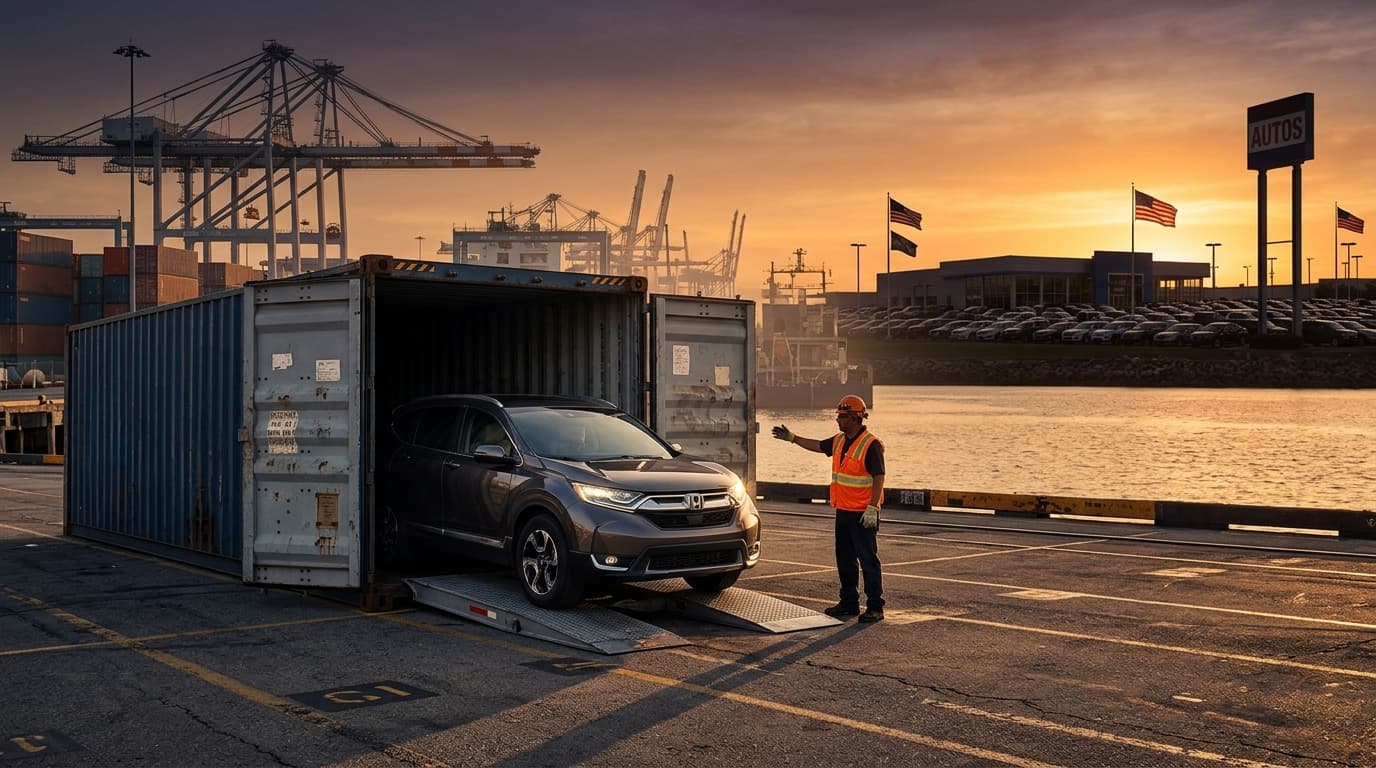
AFRIKARS handles transportation of cars to the port, export processes, ocean shipping, customs clearance and delivery. We act as the importer of record. Hence, you don't need to deal directly with the port or hire a separate clearing agent.
Watch out for unusually low prices, pressure to pay immediately, unverifiable business details, and refusal to allow independent vehicle inspections.
Yes, provided you verify the dealer, inspect the vehicle, confirm its documents, and avoid making full payment before completing the necessary checks.
Ask about the vehicle's ownership, accident history, mileage, maintenance records, customs clearance, warranty, and final purchase price.
Yes. AFRIKARS helps you explore vehicles sourced from the United States, review available vehicle information, and compare options before making a purchase.