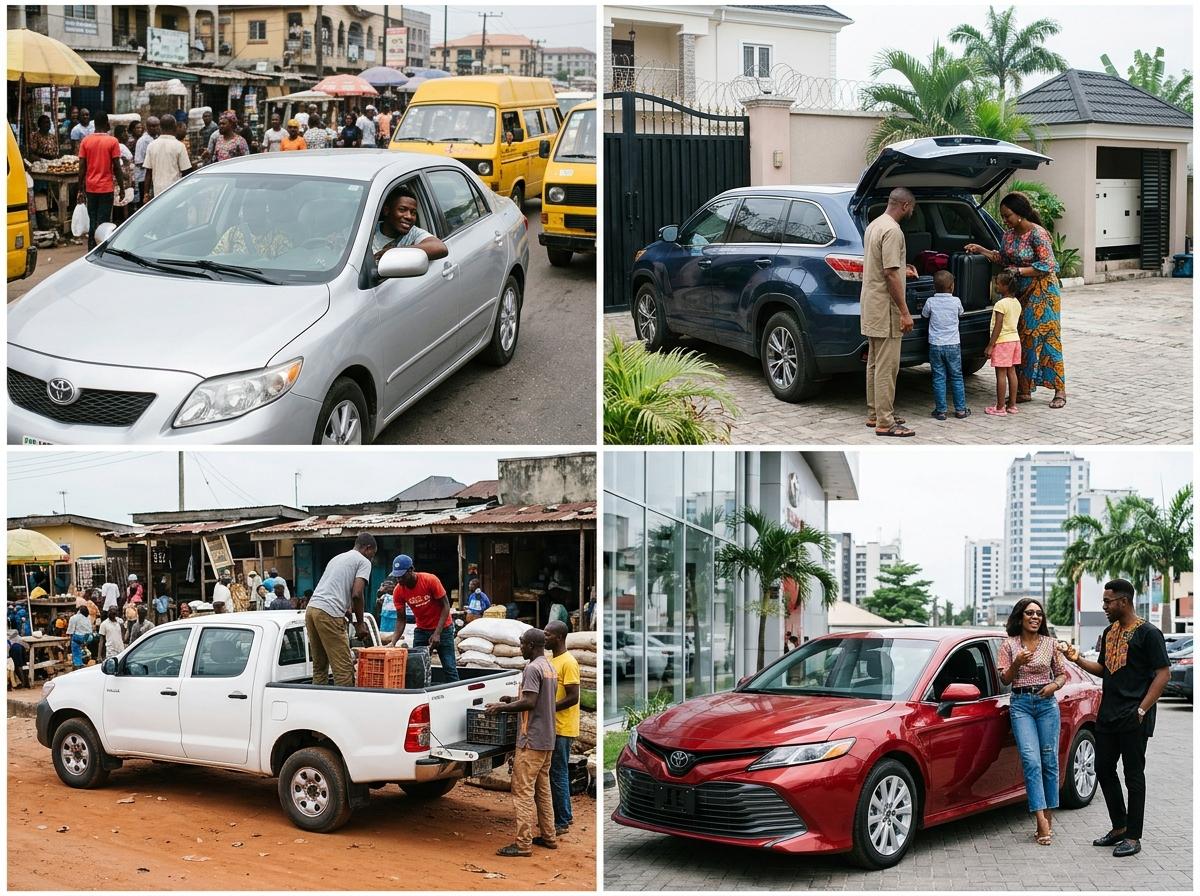
Money gets tight, fuel prices bite, and a brand-new car sits far out of reach. So where do you look? For many Nigerians, the answer starts with a Toyota. But which models truly count as cheap Toyota cars in Nigeria, and which ones hide expensive surprises?
The market sends mixed signals. New cars sit far beyond the reach of the average buyer, while locally used cars often hide their history, which leaves fairly used imports as the middle ground. Prices also swing widely. Corolla prices, for example, run from about ₦4 million to over ₦40 million, depending on year and condition. A low sticker price alone therefore tells you very little.
This guide shows you the most affordable Toyotas to consider, with real price ranges, running costs, and buying tips. You will also learn how to compare local cars with US imports, and how Afrikars helps you see the full landed cost before you commit. Read on and find cheap Toyota cars in Nigeria that truly save you money.
Toyota leads the Nigerian market for clear reasons. Credit goes to the brand's durability on tough roads, fuel efficiency, affordable spare parts, and strong resale value. Those four strengths matter even more when you buy on a budget, because a cheap car only saves money when it stays cheap to own.
- Parts everywhere: Toyota runs a dedicated spare-parts network and supplies genuine parts through accredited dealers. Parts for popular models such as the Camry, Corolla, and Sienna also sit in major markets like Ladipo in Lagos.
- Mechanics who know the car: Almost every Nigerian repairer understands Toyota engines, so you rarely wait long or pay specialist rates.
- Good fuel economy: The Corolla delivers roughly 10 to 13.7 km per litre, and the Camry ranges from about 9.8 to 13.6 km per litre.
- Resale value: Toyota vehicles keep about 53 percent of their value after five years, compared to roughly 45 percent for the industry. Nigerian dealers report the same pattern at home.
One caution applies. The Corolla may not be the cheapest car to buy, yet its fuel savings, durability, and resale value help cut the long-term cost of owning it. Judge every car by its total cost, not only its price tag.
Prices depend on year, condition, and whether the car is Nigerian-used or Tokunbo (foreign-used). The table below pulls together published 2026 ranges. Dollar equivalents use ₦1,376 to US$1, the rate AFRIKARS currently displays on its site, so treat them as estimates.
| Toyota Model | Year and Type | Approximate Price | USD Equivalent |
|---|---|---|---|
| RAV4 | 2005–2008, Nigerian-used | ₦1.5 million – ₦2.5 million | $1,100 – $1,800 |
| Corolla | 1999–2004, Nigerian-used | ₦2 million – ₦4 million | $1,450 – $2,900 |
| Camry | 2002–2003, Nigerian-used | ₦2.7 million – ₦3 million | $2,000 – $2,200 |
| Camry "Big Daddy" | 2003–2005, Tokunbo | ₦7 million – ₦8 million | $5,100 – $5,800 |
| Corolla | 2003–2006, Tokunbo | ₦8 million – ₦9.5 million | $5,800 – $6,900 |
| RAV4 | 2003–2004, Tokunbo | ₦8 million – ₦9.5 million | $5,800 – $6,900 |
| Camry LE | 2007–2009, Tokunbo | ₦8.5 million – ₦10 million | $6,200 – $7,300 |
| Sienna | 2005–2007, Tokunbo | ₦9 million – ₦10 million | $6,500 – $7,300 |
Newer cars cost far more. A Lagos and Abuja price list shows a 2015 Camry near ₦15.5 million and a 2017 Corolla near ₦17.5 million. Tokunbo Corollas from 2015 to 2018 at about ₦9 million to ₦17 million.
Two patterns stand out. First, Nigerian-used cars cost much less than Tokunbo cars of the same age, yet they carry more mystery. Second, the cheapest prices belong to old cars, so you must budget for repairs. Ranges also shift with the exchange rate, so check several current listings before you decide.
Each model below suits a different driver. Match the car to your daily routine, not only to your budget.
The Corolla sits at the top of most budget lists. It offers easy parts, simple mechanics, and fuel use of roughly 10 to 13.7 km per litre. Its compact size suits city traffic, and its low upkeep makes it popular with ride-hailing drivers. Most Corollas also run engines under 2,000cc, which helps with the new Green Tax rules covered later. Pick it when you drive daily and want the lowest running costs.
The Camry gives you a larger cabin and a smoother ride. The "Big Daddy" generation (2003–2005) costs about ₦7 million to ₦8 million as a Tokunbo, while Nigerian-used examples from the early 2000s sell for far less. Fuel use ranges from about 9.8 to 13.6 km per litre. Pick it when you want comfort for family or long trips.
Older RAV4s offer SUV height and space at sedan-like prices. Nigerian-used models from 2005 to 2008 sell between ₦1.5 million and ₦2.5 million, and Tokunbo 2003–2004 models sit near ₦8 million to ₦9.5 million. Reported fuel use ranges from 12.75 to 15.73 km per litre. Pick it when rough roads or ground clearance matter to you.
The Sienna rules Nigeria's minivan segment. It offers space for large families, school runs, and even cargo, and it keeps strong resale value. A 2005–2007 Tokunbo costs about ₦9 million to ₦10 million. Expect higher fuel use than a sedan, so budget for that.
The Yaris suits tight streets and tight budgets. One guide rates its consumption near 5.7 litres per 100 km which works out to roughly 17.5 km per litre. Fewer of them circulate in Nigeria than Corollas, so shop around, and check parts for your exact year.
The Avensis gets less attention than the Corolla or Camry, so prices can drop low. A 2001 Avensis listing sat near ₦350,000 on one price list. Old cars like this demand a careful inspection and a parts check before you pay.
If you want a step up later, the Highlander and Prado cost more to buy and fuel. Their average consumption at about 7 to 10 km per litre, against 12 to 15 km per litre for the Corolla and Yaris.
Three routes lead to a budget Toyota, and each one trades price against certainty. Compare them side by side:
| Route | Typical Price | Main Advantage | Main Risk |
|---|---|---|---|
| Nigerian-used | Lowest | Cheap entry, and plenty of cars to see in person | Locally used cars often come with hidden histories |
| Tokunbo from a local dealer | Middle | Newer cars and easy inspection | The dealer's margin lifts the price, and papers need checking |
| Direct US import | Varies | You pick the exact year, trim, and mileage, and see the landed cost first | You wait for shipping and clearing, and you pay duty and fees |
Age rules also shape your choice. The 2026 rules cite a 12-year limit for imported used cars, counted from the year of manufacture, though the official trade portal lists a 15-year rule. Confirm the current limit with Customs before you ship. Either way, the very oldest cheap Toyotas, such as 2003 Camrys, already sit inside Nigeria. If you want one, you must buy locally. If you want a newer car, importing gives you a wider pool.
So choose by priority:
- Lowest price now: Buy Nigerian-used, and inspect hard.
- Balance of age and price: Buy a Tokunbo from a dealer you can verify.
- Best match and clear costs: Import the exact car you want, and compare the landed price with local listings.
The asking price covers only part of the bill. Before you celebrate a bargain, add these costs:
- Fuel: Work out your monthly litres. For example, 1,000 km a month at 12 km per litre uses about 83 litres. Multiply that by the current pump price to see your bill. Highlanders and Prados average only 7 to 10 km per litre, so they cost more to run.
- Servicing: One guide puts routine service costs for Corollas and Yarises at roughly ₦25,000 to ₦60,000, and for other models at ₦35,000 to ₦80,000, depending on engine and workshop.
- Repairs on older cars: Brake pads, suspension bushings, and AC servicing top the usual list, and old cars need them more often.
- Insurance: Third-party cover costs ₦15,000 a year for private cars, and the law requires it.
- Registration and papers: Plates, the vehicle licence, and the roadworthiness certificate all add up. A Lagos private plate at ₦30,000 to ₦40,000.
- Import charges (for imports): Customs duty, levies, and the Green Tax can lift a US price sharply, as the next sections show.
The 2026 rules also reward smaller engines. Duty on used vehicles fell from 20%, 15%, and 10% to 5% after 1 July 2026, while a new Green Tax hits engines of 2,000cc and above and spares smaller cars. That detail favours the Corolla and Yaris over larger-engine Toyotas when you import. Confirm current rates with Customs or a licensed agent before you budget.
A low price attracts sharp sellers, so slow down and verify. Follow this checklist for every car:
Test the engine, gearbox, brakes, suspension, and AC on a real drive. Then hire a trusted mechanic for an independent inspection. It is advisable for buyers to compare several cars and to bring a mechanic along.
Compare the VIN on the dashboard and door frame with every document. Our VIN Check helps you start, and a mismatch means you should stop.
Old Toyotas often carry rolled-back odometers. Compare the reading with pedal wear, the steering wheel, service records, and a history report. Carfax data suggests roughly 2.1 million US vehicles carry a rolled-back odometer.
Cheap often means damaged. A salvage title marks a car that an insurer once declared a total loss, and the brand can follow the car for life. Run the VIN through a history report before you pay, especially for any Tokunbo.
Enter the plate on the FRSC NVIS portal at nvis.frsc.gov.ng to confirm that it holds a valid record and matches the car. Match the seller's ID with the name on the ownership papers.
The Nigeria Customs Service launched the Customs Verification Management System in November 2025. It lets buyers confirm a vehicle's duty payment status with a VIN, and the fee stood at ₦15,000 at launch. Confirm current details on the official Customs site.
NAICOM officials say you can verify a motor policy with the *7292# code. Fake certificates circulate, so check every policy.
Get a written invoice with the seller's name, the VIN, the price, and the refund terms. Pay through a traceable method, and never rush because a seller claims another buyer waits.
Yes, and the US market offers a deep pool of Corollas, Camrys, RAV4s, and Siennas. Still, a low US price does not equal a low Nigerian price. Freight, duty, levies, and fees all stack on top. This example comes from the Afrikars cost calculator, which uses ₦1,390 to US$1 for illustration:
| Cost Line (2021 Toyota Camry SE) | Amount (USD) |
|---|---|
| Vehicle price | $14,500 |
| Shipping, Houston to Lagos | $1,800 |
| Duty, levies, VAT, and customs charges | $6,963 |
| AFRIKARS service fee | $1,500 |
| Total landed cost | $24,763 (about ₦34.5 million) |
That sample lands at about 1.7 times the US price. Two lessons follow:
- Fixed costs hit cheap cars harder. Shipping and service fees do not shrink in proportion when the car costs less, so the cheapest US car does not always become the cheapest car in Lagos.
- Customs uses its own valuation. Nigeria Customs values imported cars through its VIN valuation system, not through your invoice, so a low purchase price does not cut duty in a straight line.
Imports still shine in one situation: when you want a specific, newer Toyota with a clear history and a known landed price. Run your own numbers before you decide, because duty rates, levies, and exchange rates move. Expect roughly six weeks from purchase to delivery on average, a figure from our own platform that does not guarantee your timeline.
- Chasing the lowest price: The cheapest car often needs the biggest repair bill.
- Skipping the independent inspection: Paint and polish hide a lot.
- Ignoring engine size: Larger engines cost more to fuel, and they face the Green Tax when you import.
- Forgetting parts for rare models: Corollas, Camrys, and Siennas have deep parts support. Less common models may not.
- Trusting papers without checking: Verify the plate, the customs status, and the insurance yourself.
- Overlooking history: Rolled-back odometers and salvage titles lurk behind many bargains.
- Ignoring the total cost: Add servicing, insurance, registration, and fuel to the price.
- Rushing the deal: Pressure from a seller serves the seller, not you.
At Afrikars, we help you hunt for cheap Toyota cars in Nigeria with the full price in view. You browse US dealer stock and auction cars, including Toyota sedans and SUVs, and each listing shows an estimated landed cost for Lagos. Then you compare that figure with local prices before you commit.
This list shows what you get:
- Landed price upfront: You see the car, shipping, and duty in one figure, and the cost calculator itemises each line in dollars and naira.
- Marketplace checks: You review the dealer's walkthrough video and the vehicle history report before you authorise a purchase, and our team checks both first.
- VIN Check: Our VIN Check costs ₦8,500 per report, and anyone can buy one with a card. Verified customers receive 3 free checks at the point of purchase.
- Auction bidding: Our desk bids for you on live US auction lots through proxy bidding. Auction cars sell "as is," so review the title status and condition report first.
- Escrow protection: A licensed partner holds your funds and releases them in stages as each step clears.
- End-to-end handling: We act as importer of record, hold our own customs licence, clear your car, and pay the duties. You never deal with the port.
- Documents at delivery: You receive the title, the customs clearance papers, and proof of duty paid. Registration and plates come as an optional add-on.
- Live tracking: You follow your car in the app from the US port to your door.
Want a specific Toyota? Tell our Concierge team the model, year, and budget, and we search our dealer and auction network for a match. A few honest notes apply too. Afrikars does not guarantee delivery times, and government regulation can raise a landed cost in rare cases. Contact us with any question, and compare every option before you decide.
Older Nigerian-used models sit at the bottom. Published 2026 ranges show RAV4s from 2005 to 2008 at ₦1.5 million to ₦2.5 million, early Corollas at ₦2 million to ₦4 million, and early-2000s Camrys near ₦2.7 million to ₦3 million. Tokunbo Toyotas start closer to ₦7 million.
The Yaris rates near 5.7 litres per 100 km. The Corolla delivers about 10 to 13.7 km per litre, and the RAV4 reportedly reaches 12.75 to 15.73 km per litre. Real figures shift with traffic and road conditions.
Nigerian-used cars cost less upfront, yet they often carry hidden histories. Tokunbo cars cost more but usually come newer. Compare the total cost, including repairs, rather than the price alone.
Third-party insurance, which the law requires, costs ₦15,000 per year for private cars. A comprehensive cover at ₦70,000 to ₦150,000 annually.
Yes. The Green Tax, which took effect on 1 July 2026, applies to engines of 2,000cc and above, while smaller engines stay exempt. Confirm current rates with Customs before you budget.
Compare several listings, inspect the car with a mechanic, match the VIN with every paper, verify the plate and customs status, check the mileage and salvage history, and pay only through traceable methods with a written invoice.
Yes. You browse US dealer and auction Toyotas, see the estimated landed cost, review history reports, and keep your money in escrow until each step clears. We also clear customs and deliver the car. Afrikars does not guarantee delivery times, so plan with a buffer.