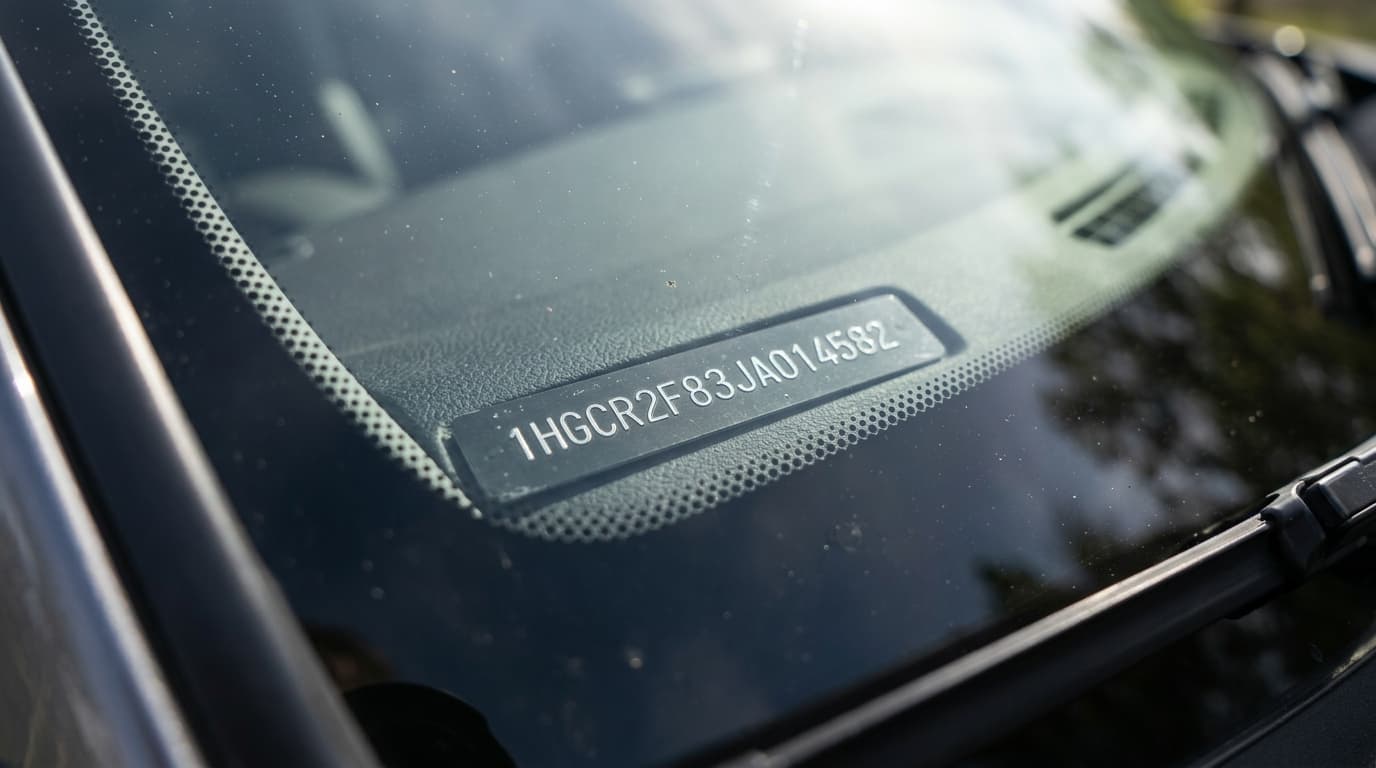
The biggest mistake when buying a used car may not be choosing the wrong colour, missing a better price, or negotiating poorly. It may be buying a vehicle without knowing its true identity. A car can look perfect in photographs and still have details that deserve further investigation. That is why learning how to use a VIN decoder is an important step for anyone considering a used or imported vehicle.
That string of 17 characters on the dashboard or vehicle documents is not meaningless. It is the vehicle's identification number, and decoding it can reveal important information about the car's manufacturer, specifications, model year, manufacturing plant, and other identifying details. Comparing this information with the seller's listing can help you identify discrepancies before you commit your money. However, a VIN decoder should be viewed as a starting point for verification, not a substitute for a complete vehicle history check.
The stakes can be even higher when you are buying a vehicle from the United States and bringing it to Nigeria. By the time you discover a problem, you may already have paid for the car, shipping, and other associated costs. At AFRIKARS, we don't just help simplify the process of sourcing and importing vehicles. We also ensure we provide information that would help you make the right decision. In this guide, you will learn how a VIN decoder works, how to read a 17-digit VIN, and how to use VIN information before buying an imported or used vehicle.
Buying a used car without checking its history can feel like making a major decision with only half the information. A VIN decoder is a tool that interprets the characters in a vehicle's VIN and presents the information in a more understandable format. By entering a vehicle identification number (VIN) into a VIN decoder, you can retrieve information encoded in the vehicle's identification number and better understand what you are looking at before making a purchase.
For vehicles covered by the U.S. VIN system, the VIN contains 17 characters that identify the manufacturer and encode specific vehicle information. The VIN itself is more than a random combination of letters and numbers. Depending on the vehicle and manufacturer, it can help identify details such as the manufacturer, vehicle attributes, model year, manufacturing plant, and a vehicle's unique production sequence.
A VIN decoder can help reduce uncertainty. Instead of relying entirely on a seller's description, you can use the vehicle's unique identification number to verify key information about the car. This can be especially useful when comparing used cars, evaluating vehicles from online marketplaces, or considering a vehicle imported from another country.
For anyone buying a vehicle from the United States for import into Nigeria, checking the VIN before committing to the purchase can be an important part of the due diligence process. It helps you understand the vehicle you are considering before you move further into purchasing, shipping, and importation.
The exact information returned by a VIN decoder depends on the manufacturer, vehicle, and database used. However, decoding a VIN can help you understand several important aspects of a vehicle, including:
- Manufacturer: The first three characters generally identify the manufacturer and vehicle type through the WMI.
- Vehicle specifications: Characters in the VDS can encode manufacturer-defined information about the vehicle, such as its model, body type, engine or restraint system. The exact meaning varies by manufacturer.
- Check digit: For U.S.-market VINs, the ninth position is used as a check digit to help validate the VIN.
- Model year: The 10th character in the standard U.S. VIN structure identifies the model year.
- Manufacturing plant: The 11th character identifies the plant of manufacture in the U.S. VIN system.
- Production identifier: The final section helps distinguish the individual vehicle through manufacturer-assigned identifiers.
Before you can use a VIN decoder, you need to find the vehicle identification number. Fortunately, manufacturers place the VIN in several locations on a vehicle and its documentation. Here are some places where you can easily find the VIN number on a car:
Stand outside the vehicle and look through the windshield on the driver's side. On many vehicles, you'll find a small plate or visible marking containing the 17-character VIN at the lower portion of the dashboard. This is often the quickest location to check because you may not need to open the vehicle or search through its documents.
Some vehicles display the VIN on a label attached to the driver-side door, door jamb or door frame. Open the driver's door and inspect the surrounding area for a vehicle information label. Depending on the manufacturer, this label may also contain other information about the vehicle.
The VIN isn't restricted to the physical vehicle. Your vehicle registration documentation may also contain the VIN. Generally, the registration card is among the places where owners can find their vehicle's identification number. This is particularly useful when you're researching a vehicle remotely and don't currently have physical access to it.
Depending on the market and documentation available, the VIN may also appear on insurance documents. If you're checking a used vehicle, compare the VIN on the paperwork with the VIN physically displayed on the vehicle where possible.
For vehicles sourced from the United States, the VIN can also appear on documents associated with the vehicle's title and ownership. This is especially important when purchasing an auction or imported vehicle. Don't rely on a VIN copied from a listing alone. Compare the number against the available vehicle documentation and, where possible, the physical vehicle.
Using a VIN decoder is generally straightforward. You do not need to understand every letter and number in a VIN before you can decode it. The tool does the technical work of interpreting the information reported for that vehicle.
Below is how you can identify a vehicle VIN:
Start by locating the vehicle's VIN. On many vehicles, you can find it on the dashboard near the windshield or on a vehicle certification label. The VIN may also appear on relevant vehicle documents.
For a vehicle you are considering buying, don't simply copy the VIN from an online listing and assume it is correct. Where possible, compare the VIN displayed in the listing with the VIN physically present on the vehicle and with the vehicle's documentation.
Once you have the VIN, enter it into a reputable VIN decoder. For example, at Afrikars, we provide a free public VIN decoder where users can enter a VIN and retrieve information reported by the manufacturer. Meanwhile, Vin Decoder is free only after creating an account and completing the KYC onboarding requirements. You can sign up on our website, follow the instructions on our platform to access the public VIN decoder.
After submitting the VIN, carefully review the information returned by the VIN decoder.
Pay particular attention to details such as:
- Manufacturer
- Vehicle type
- Model or series
- Body type
- Engine-related information, where available
- Model year
- Manufacturing plant
- Other manufacturer-reported specifications
Do not assume that every VIN decoder displays the same information. Manufacturers use VINs differently within the applicable standards. Hence, manufacturer-specific details can vary.
This is one of the most valuable steps when using a VIN decoder before buying a car. Suppose a seller advertises a vehicle as a particular model and year. Decode the VIN and compare the returned information with the listing.
If the information doesn't match, don't ignore the discrepancy. It could be an innocent listing error, but it could also indicate that the vehicle has been incorrectly described. Ask the seller for clarification before proceeding with the purchase.
A VIN decoder gives you a starting point, not necessarily the complete story.
If you are buying a used or imported vehicle, use the VIN to carry out additional checks where appropriate. Depending on the vehicle and the records available, these checks may help you investigate its history, title status, previous damage or auction records.
This is particularly important when buying vehicles sourced from auctions. A decoded VIN can help establish the vehicle's identity and specifications, but you should examine available vehicle-history information and condition reports before making a purchase.
At first glance, a 17-character VIN can look like a meaningless combination of letters and numbers: 1HGCM82633A123456
However, the characters are structured rather than randomly generated. For vehicles using the standard U.S. 17-character VIN system, the VIN is divided into sections that provide different types of information. NHTSA identifies the main sections as the World Manufacturer Identifier (WMI), Vehicle Descriptor Section (VDS), check digit and Vehicle Identifier Section (VIS).
Here's how to understand the structure.
The first three characters form the World Manufacturer Identifier (WMI). The WMI identifies the manufacturer and provides information about the vehicle type. Generally, the first three characters serve as the manufacturer identifier. This means the beginning of a VIN can help answer a basic question: Who manufactured this vehicle?
However, don't assume that you can accurately interpret every individual WMI character without consulting an authoritative database. WMI assignments are structured codes, and their interpretation depends on the applicable manufacturer information.
Characters 4 through 8 make up the Vehicle Descriptor Section, or VDS.
This is where things become more manufacturer-specific. The VDS can encode information about the vehicle's characteristics, but manufacturers determine the specific coding within the applicable requirements.
Depending on the manufacturer, these characters may provide information relating to the vehicle's:
- Model or line
- Series
- Body type
- Engine
- Restraint system
- Other vehicle specifications
The ninth character is the check digit in the standard U.S. VIN structure. It is used to validate the VIN through a prescribed calculation. The check digit is calculated from the other VIN characters using assigned values and position-specific weighting. For most car buyers, you don't need to perform this calculation manually. A reliable VIN decoder can handle the technical validation.
The 10th character identifies the model year under the U.S. VIN system. This is particularly useful when checking a used car listing because the model year stated by the seller should correspond with the information associated with the VIN.
However, model-year codes can repeat across different years, so interpreting this character in isolation isn't always enough to establish the vehicle's complete history. A VIN decoder can provide a more practical interpretation when the full VIN is entered.
The 11th character identifies the manufacturing or assembly plant for vehicles using the U.S. VIN structure.
At Afrikars, our VIN decoder specifically provides information about a vehicle's build plant and country when that information is available from the manufacturer's reported data. This can help you understand where the vehicle was assembled.
The final six characters form part of the Vehicle Identifier Section (VIS). These characters help distinguish one vehicle from another. Manufacturers may use this section for production sequencing and other manufacturer-specific identification purposes. Our VIN documentation identifies positions 12 through 17 as part of the VIS and illustrates manufacturer-specific uses of these positions. The final characters are therefore important because the complete VIN identifies a specific vehicle, not merely a particular model.
A Simple VIN Structure to Remember
For a standard U.S. 17-character VIN, you can remember the broad structure like this:
- 1–3 → WMI → Manufacturer identification
- 4–8 → VDS → Vehicle description
- 9 → Check digit → VIN validation
- 10 → Model year
- 11 → Manufacturing plant
- 12–17 → VIS → Vehicle identification/production information
The important caveat is that not every character has a universal meaning across every manufacturer. The VIN structure establishes the sections, while manufacturers provide the information needed to decode their VINs.
Yes, you can decode a VIN for free using our free online VIN decoder tool. Kindly note that the Vin Decoder is free only after creating an account and completing the KYC onboarding requirements. You can click here, follow every other step to successfully decode your VIN for free.
Yes. You can decode a VIN without physically having the car. All you need is the vehicle's VIN and access to a suitable VIN decoder.
Yes. You can check a U.S. car's VIN before importing it to Nigeria, and doing so can help you make a more informed purchasing decision.
Not necessarily. A basic VIN decoder does not automatically provide a complete list of accidents involving a vehicle. Accident information depends on whether relevant records exist in the databases being searched and whether the particular VIN service includes those records. Hence, if you're buying a used vehicle, especially one sourced from an auction, investigate its available history separately and inspect its condition carefully.
A VIN decoder can be accurate for the information it has access to, particularly when it uses manufacturer-provided or authoritative data. However, the results depend on the vehicle, manufacturer, and database being used.
Yes. Afrikars can help you understand important vehicle details using the VIN, making it easier to research a car’s identity and history before making a purchase or importing it.
Yes. Once you understand the vehicle you want, Afrikars can help you find and source suitable cars for sale, including vehicles that meet your preferred specifications and budget.