Checking accident history before buying a used car could save you from unexpected repair bills and serious safety concerns. A vehicle advertised at an attractive price may seem like a bargain until you discover that it has sustained major collision damage, suffered flood exposure, or undergone repairs that were not properly documented. By then, you may have already paid for the car, shipping, and other importation expenses.
Why do these problems catch people off guard? Vehicle history records can be incomplete, sellers may not know the full details of a car's past, and cosmetic repairs can make previous damage difficult to spot. Even a free VIN check that returns no warning does not guarantee that the vehicle has never been involved in an accident. Without additional checks, you risk buying a car whose actual condition differs from what you expected.
At AFRIKARS, we are dedicated to educating our audience so they can access the right information and make informed car-buying decisions. That is why our team of experts has put together this guide to help you check accident history, identify signs of hidden damage, understand vehicle history reports, and take the right precautions before purchasing a used car. Whether you are buying locally or importing a vehicle from the United States, this guide will help you evaluate your options more carefully and reduce the risk of costly surprises.
Checking a used car's accident history is essential to protect your physical safety, financial investment, and peace of mind. A car can look spotless on the outside while hiding severe internal or structural flaws.
Below are key reasons to check accident history:
- Hidden Structural Damage: A major collision can compromise the car's frame, chassis, or crumple zones, reducing its ability to protect you in a future crash.
- Safety System Failures: An accident report can reveal whether airbags deployed, whether seatbelt tensioners triggered, or if electronic sensors and airbag control modules were poorly repaired or skipped entirely.
- Avoidance of Salvage or Rebuilt Titles: Checking the history tells you if the vehicle was previously declared a "total loss" by an insurance company and patched back together.
- Negotiation and Fair Pricing: Knowing about past damage gives you strong leverage to lower the asking price or walk away if the repair costs do not make economic sense.
- Resale and Trade-In Value: Cars with documented accident histories depreciate faster and are significantly harder to sell or trade in later down the road.
- Import and Cross-Border Risks: Many used vehicles in Nigeria are imported ("Tokunbo") from North America, Europe, or Asia. Cross-border checks using the VIN or chassis number help uncover fragmented histories, water/flood damage, or odometer rollbacks that local visual inspections miss.
Also Read: Car Import Duty in Nigeria | Rates, Costs & How It Works
A car accident history report can provide useful information about a vehicle’s past, helping you identify potential risks before buying it. Depending on the provider and available records, the report may reveal:
- Reported accident records: Details of collisions recorded in the database, although not every accident will appear.
- Damage severity: Available information about whether reported damage was minor, moderate, or severe.
- Salvage or rebuilt title records: Records indicating that an insurer or relevant authority classified a vehicle as a total loss or that it underwent rebuilding, where such information is available.
- Flood damage records: Certain reports may identify previously recorded flood damage, which can affect a vehicle’s electrical systems, engine, and long-term reliability.
- Odometer readings: Available mileage records that may help you identify inconsistencies or possible odometer tampering.
- Vehicle ownership and title history: Depending on the report, you may find information about title changes and other recorded events.
Also Read: American Car Dealers in USA | How to Buy Cars for Export
A free accident history check can reveal major title brands and reported incidents, but it has important limitations and will not always catch every instance of hidden or unrecorded damage.
What free checks often miss:
- Unreported Damage (Minor or DIY Repairs): If an owner paid for repairs out-of-pocket, had a mechanic fix a minor wreck privately, or the crash was never reported to insurance or police, it will not show up on a vehicle history report.
- Hidden Structural/Frame Issues: Paperwork shows that an accident happened, not the quality of the repair. Sloppy frame straightening, cheap aftermarket parts, or masked cosmetic patchwork won't be detailed in a basic VIN check.
- Title Washing: Unscrupulous sellers sometimes move a salvage or flood-damaged car across state or national borders to "wash" the title into a clean one, bypassing basic databases.
- Flood Damage Without Insurance Claims: If a car was flooded and the owner didn't involve an insurance company (or the car was uninsured for comprehensive loss), free insurance-based databases like the NICB will turn up blank.
If you are buying a used car from the United States through AFRIKARS, review the available vehicle information before authorising the purchase. For auction vehicles, pay particular attention to the auction photographs and condition report, and run the available VIN check. Auction vehicles are sold as-is, so you should carefully assess the disclosed condition before proceeding.
You can check the accident history of a car using its Vehicle Identification Number (VIN) through vehicle history services that collect information about reported accidents, title records, and previous damage. Checking this information before purchasing a used car can help you identify potential problems, avoid unexpected repair costs, and make a more informed decision.
If you are looking for a convenient way to check accident history before buying a car from the United States, AFRIKARS is a practical place to start. The platform offers free VIN history reports for those who sign up on our website, and complete the KYC onboarding requirements. These checks can help you review available vehicle information before committing to a purchase.
Also Read: Cars for Sale in Lagos | Find Used & Tokunbo Cars Today
Before importing a used car from the USA to Nigeria, check accident history of the car to identify reported damage that could affect its safety, reliability, and resale value. A vehicle that appears attractive in photographs may have a history of collisions, flood damage, or major repairs that are not immediately visible.
Follow these steps to investigate a vehicle's history before making a purchase:
- Obtain the VIN: Ask the seller for the vehicle's 17-character VIN. Compare it with the VIN shown on the vehicle and its available documents.
- Run a VIN history check: Use a vehicle history service like those offered by AFRIKARS to look for reported accidents, title problems, salvage records, and other available information.
- Check for theft and salvage records: Use the NICB's service to search its participating insurers' records. Remember that the service does not cover every vehicle or incident.
- Review photographs and condition reports: Look for signs of previous repairs, damaged panels, missing components, or flood exposure. Ask for additional photographs if important areas are unclear.
- Arrange a professional inspection: Where possible, have a qualified mechanic or bodywork specialist assess the vehicle for structural damage, poor repairs, and mechanical problems.
- Calculate the total importation cost: Consider the vehicle's purchase price, shipping, customs duties, and other applicable costs before deciding whether it offers good value.
AFRIKARS can help simplify this process. The platform sources vehicles from the United States and facilitates purchasing, shipping, customs clearance, and delivery to your door in Nigeria. Before authorising a marketplace purchase, you can review the vehicle history report, dealer walkthrough video, and listing photographs.
Also Read: VIN Decoder: How to Decode a Vehicle VIN Number Easily
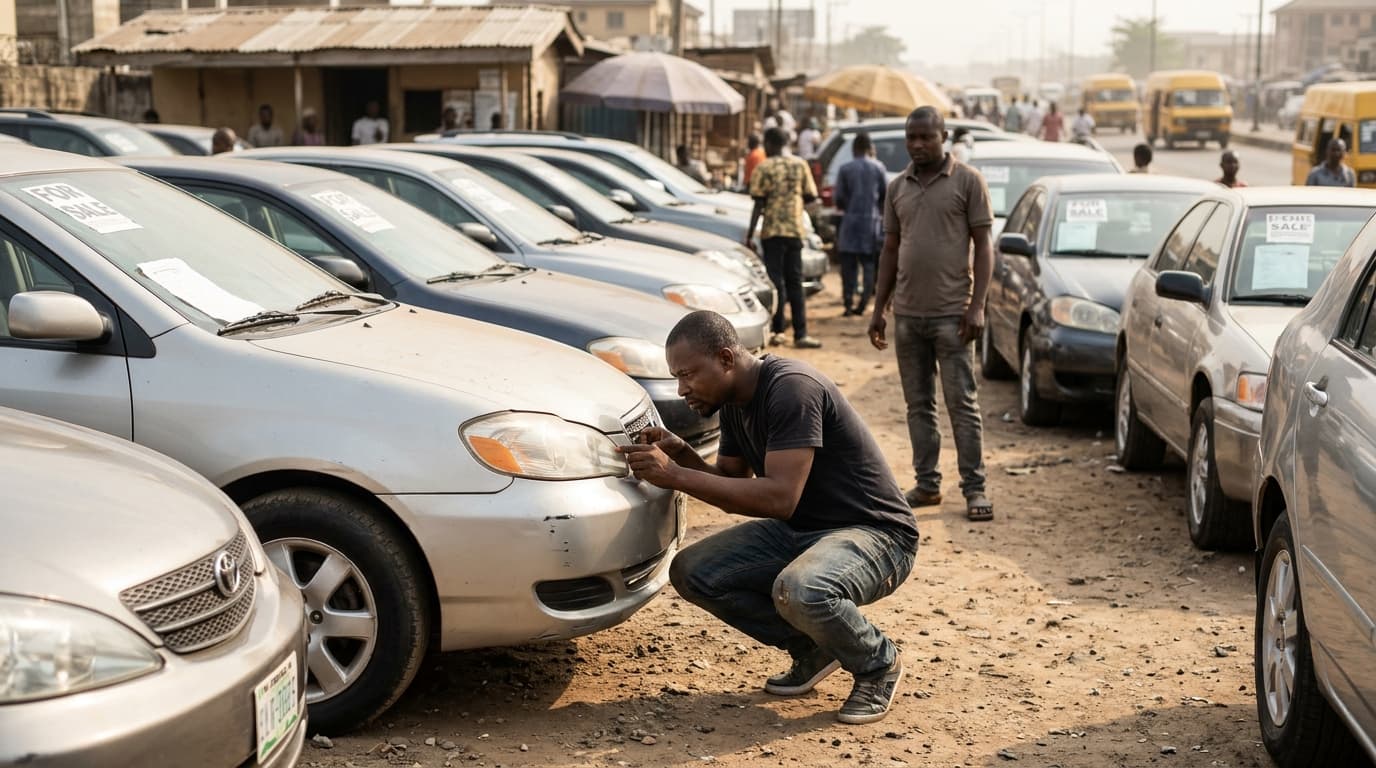
You can look for physical signs of previous damage even when a vehicle history report is unavailable. However, these signs cannot confirm every accident, especially when a vehicle has undergone professional repairs. Use them as warning signs and arrange a professional inspection if you notice anything suspicious.
Here are some things to check:
- Uneven body panels: Compare the gaps between the doors, bonnet, boot, and surrounding panels. Uneven gaps may indicate previous repairs or panel replacement.
- Inconsistent paintwork: Look for differences in colour, texture, or finish between adjacent panels. These may suggest repainting after damage.
- Visible dents and cracks: Examine the bumpers, doors, bonnet, boot, and other body panels for damage that may have been repaired or concealed.
- Damaged or misaligned lights: Check whether the headlights and taillights match and fit correctly. Different-looking lights may indicate replacement after a collision.
- Signs of structural repairs: Look for unusual welds, bent metal, or irregular repairs around accessible structural areas. A qualified technician should assess any suspected structural damage.
- Uneven tyre wear: Uneven wear may indicate alignment or suspension problems, although it can also result from ordinary maintenance issues.
- Flood damage indicators: Check for musty smells, water stains, unusual rust, mud in concealed areas, or moisture inside the vehicle. These signs may indicate water exposure but require further investigation.
You should also take the car for a test drive, where possible, and pay attention to unusual noises, steering problems, vibrations, or warning lights. These symptoms do not automatically mean the vehicle has been in an accident, but they warrant further checks.
Furthermore, AFRIKARS also facilitates the wider importation process, including purchasing the vehicle on your behalf, shipping, customs clearance, and delivery to your door in Nigeria. You can review the estimated landed cost before committing, helping you consider the vehicle's price alongside the costs of bringing it into the country.
Before you buy, check the history, review the condition, and understand the total cost. With AFRIKARS, you can access vehicle information and coordinate the buying and importation process through one platform, making it easier to approach your next used-car purchase with greater confidence.
Yes, a car may lose value after an accident, particularly if it sustained significant structural damage or has a salvage title. Even after professional repairs, its accident history can affect resale value because potential buyers may consider it a higher risk.
Yes. A car may have undergone major repairs without the incident appearing in available vehicle history databases. This can happen when nobody reports the accident to an insurer or relevant authority. Therefore, do not rely solely on an accident history report. Examine the vehicle's condition, verify its documents, and arrange an independent inspection where possible.
You can consider an accident-damaged car if you understand the extent of the damage and confirm that the repairs meet appropriate safety standards. However, avoid making a decision based solely on the purchase price. Check for structural damage, assess repair quality, estimate future maintenance costs, and compare the vehicle's price with similar cars that have no known accident history.
If a report contains conflicting accident dates, mileage readings, title records, or vehicle details, verify the VIN and compare the information with the seller's documents. Request clarification and supporting records from the seller, and consider obtaining another vehicle history report. If the inconsistencies remain unresolved, arrange an independent inspection before proceeding with the purchase.