A car auction in the USA can give you access to thousands of vehicles, including used cars, repossessed vehicles, dealer trade-ins, and accident-damaged units. The market is also remarkably active. According to the National Auto Auction Association (NAAA), US auto auctions sold more than 8 million vehicles in 2025, representing a 3% increase from 2024. Total sales exceeded $100 billion, showing how important auctions have become to the country's used-vehicle market.
Imagine finding a Toyota Camry, Honda Accord or Lexus SUV at an attractive auction price. You may be tempted to place a bid immediately, but the winning bid is only one part of the purchase. Auction fees, vehicle condition, transportation, shipping and customs duties can significantly increase your final expenses. Some vehicles may also have accident damage, title issues or mechanical faults that are not obvious from their photographs.
So, how do you find a suitable vehicle, participate in an auction and avoid costly mistakes? This guide explains how car auctions in the USA work, the major auction platforms, vehicle categories, bidding processes and important checks to complete before buying. It also explores how AFRIKARS helps Nigerian buyers access vehicles from US dealers and auctions, review available vehicle information, estimate landed costs and manage shipping and customs clearance.
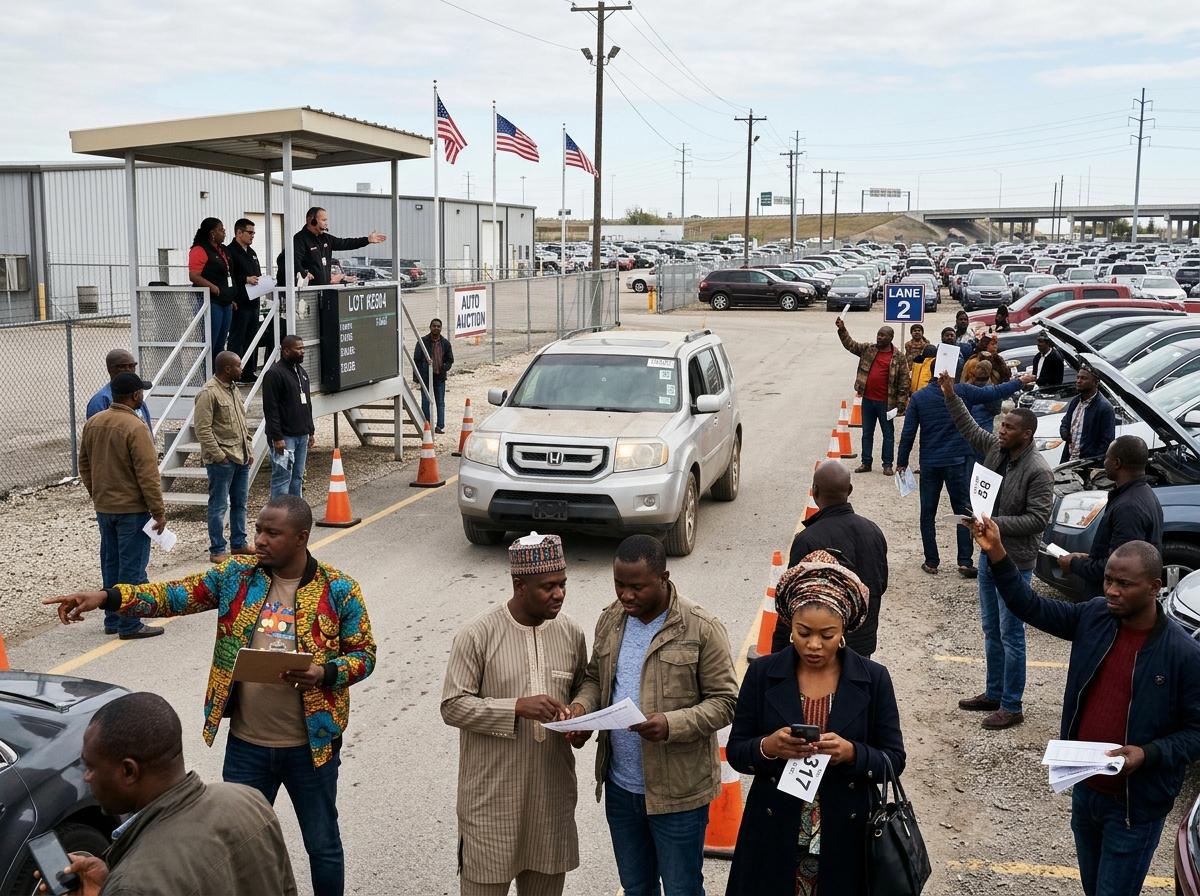
A car auction in the USA is a marketplace where vehicles are sold to the highest eligible bidder or through fixed-price purchasing options. These vehicles may come from insurance companies, banks, rental companies, dealerships, fleet operators and private sellers. Depending on the auction platform, you can find accident-damaged cars, repossessed vehicles, used cars, salvage vehicles and well-maintained units with clean titles.
Unlike traditional dealerships, where you negotiate directly with a seller, auctions allow multiple buyers to compete for a vehicle. Most major US auction platforms operate online, making it possible for international buyers to search available inventory and participate in bidding without travelling to the United States.
Here is how the process generally works:
- Find a vehicle: Search an auction platform for your preferred make, model, year and specifications.
- Review the listing: Examine the vehicle's photographs, mileage, title status, damage information and available history reports.
- Register to bid: Create an account and meet the platform's membership, identity verification and licensing requirements.
- Place your bid: Enter your offer during the auction or use an available pre-bidding option.
- Pay for the vehicle: If you win, settle the winning bid and applicable auction fees within the payment deadline.
- Arrange transportation: Move the vehicle from the auction location to the shipping port and organise export and international delivery.
For Nigerian buyers, however, winning an auction is only one part of the process. You still need to consider transportation, shipping, customs clearance and delivery.
This is where AFRIKARS can make the process easier. Instead of independently navigating different auction platforms, arranging payments and coordinating multiple logistics providers, you can explore live US auction vehicles through AFRIKARS. Our proxy-bidding feature allows you to enter your maximum budget, while we help bid on your behalf. You can also view estimated landed costs before committing to a purchase.
Also Read: How to Buy a Car Overseas Without Getting Scammed
A car auction in the USA sells most vehicles as-is, so the checks you make before bidding protect your money. Look out for the following.
- Damage type: Read the primary and secondary damage notes carefully. Front-end damage, flood damage and fire damage carry very different repair costs.
- Title status: Salvage, rebuilt and junk titles affect value, repair costs and whether a car can be registered again. Confirm the title before you commit.
- Condition notes: Labels such as “runs and drives” describe the car at check-in, not a full mechanical inspection. Treat them as a starting point.
- Mileage: Compare the odometer reading with the car’s age and the history report to spot possible rollbacks.
- Photos: Look for uneven panel gaps, water lines, deployed airbags and missing parts.
- Total cost: Weigh the likely repair bill against the landed cost of a cleaner car.
At AFRIKARS, we help you work through these checks with vehicle details, available history reports and an upfront landed cost estimate, so you bid with your eyes open.
Also Read: Check Salvage History: What a Salvage Title Means
When searching for a car auction in the USA, you will encounter several platforms offering different vehicle categories, bidding arrangements and membership requirements. Some specialise in salvage and insurance vehicles, while others provide access to dealership and wholesale inventory.
Here are some popular platforms to explore:
If you are in Nigeria and want a more organised way to access a car auction in the USA, AFRIKARS is worth considering. At AFRIKARS, we provide access to live US auction vehicles through our platform. You can explore available auction listings, review photographs and available condition information, and check the estimated landed cost before authorising a purchase.
More importantly, you do not have to manage every stage of the import process independently. We can purchase the approved vehicle on your behalf, arrange transportation to the port, manage shipping and handle Nigerian customs clearance and delivery. Likewise, our app allows you to follow the vehicle's progress.
Copart is one of the largest online vehicle auction platforms in the United States. It offers cars, SUVs, trucks, motorcycles and other vehicles in different conditions. Its inventory includes clean-title, salvage-title and damaged vehicles.
Copart allows international buyers to register and search available inventory. However, some vehicles require specific business licences or broker assistance before you can bid. Buyers should also review the title and export eligibility of a vehicle before purchasing it.
Insurance Auto Auctions is another major platform where buyers can find vehicles from insurance companies, dealerships, fleet operators and other sellers. Its inventory includes damaged, repairable and used vehicles.
IAA has an online registration process, and its standard registration fee for bidding on its inventory is currently $225. However, access to particular vehicles may depend on your location, buyer category and licensing requirements.
Manheim is a major wholesale vehicle auction network in the United States. It primarily serves automotive dealers and other eligible industry participants. Buyers can find used vehicles from dealerships, rental companies, fleet operators and other commercial sellers.
However, Manheim is not necessarily the easiest option for an individual international buyer because access to many auctions requires dealer credentials or an authorised buying arrangement.
If you want to access US auctions without independently coordinating the entire import process, explore the available options on AFRIKARS.
Purchasing a vehicle through a car auction in the USA involves more than paying the winning bid. You need the appropriate purchase and ownership documents, export paperwork, and Nigerian import documentation to complete the process.
The documents you need may vary depending on the auction company, vehicle title status, shipping arrangement, and applicable regulations.
- Government-Issued Identification: Auction platforms generally require identity verification before granting bidding access. A valid government-issued identification document may be necessary.
- Auction Invoice: This document confirms the vehicle purchase, winning bid amount and applicable auction charges.
- Vehicle Title: The title establishes legal ownership and identifies the vehicle's title status. Confirm that the document is valid and suitable for the intended export process.
- Bill of Lading: The shipping company issues this document as evidence of the transportation contract and receipt of the vehicle for shipment.
- Export Documentation: Depending on the vehicle and shipping arrangement, you may need export declarations and other documents required by the relevant US authorities.
- Nigerian Customs Documentation: You will need the applicable import documentation and evidence of customs duty payment to complete clearance in Nigeria.
Also Read: Import Cars to Nigeria: Costs, Steps & Requirements Guide
Buying and importing an auction car typically costs about double the initial hammer (winning bid) price once all fees, shipping, and customs duties are settled.
Here is a breakdown of the major expenses to consider:
For a vehicle won at auction, the total landed and cleared cost generally falls into these ranges:
- Hammer (Winning Bid) Price: Varies widely (e.g., $5,000 to $20,000+ USD).
- Auction & Broker Fees: Added by the auction platform and intermediary/broker (typically a few hundred to over $1,000 USD depending on the final bid).
- Local Transport to US Port: Towing or flatbed transport from the auction yard to the export port (roughly 300–600+ USD).
- Ocean Shipping (RoRo / Container): Roll-on/Roll-off (RoRo) shipping from North America to a Nigerian port (like Apapa or Tin Can Island) typically ranges around $1,500 to $2,500+ USD.
- Import Duty: 20% on the Cost, Insurance, and Freight (CIF) value.
- NAC Levy: National Automotive Council levy (5% for used vehicles as of mid-2026).
- [Green Tax](https://customs.gov.ng/news/customs-continues-nationwide-sensitisation-on-green-tax-ahead-of-july-1-implementation) / Surcharges / CISS / ETLS: Additional environmental and port surcharges (~2% to 4% depending on engine displacement/size, plus 7.5% VAT applied on the stacked total).
- Effective Total Duty & Tax: Usually calculates to roughly 35%–50% (or more depending on Nigeria Customs automated VIN valuations) of the CIF value.
- Clearing, Terminal & Agent Fees: Port handling, terminal charges, and customs clearing agent fees in Lagos range from ₦548,400 to over ₦1,200,000+ (or ~400–900+ USD equivalent).
- Inland Delivery: Transporting the cleared vehicle from the Lagos port (Tin Can / Apapa) to other parts of Nigeria (such as Abuja or northern states) adds ₦150,000 to ₦400,000+.
Note: Import duties, exchange rates, shipping charges, and other government-related costs can change. Always confirm the applicable requirements and final charges for your specific vehicle before purchasing.
AFRIKARS coordinates the purchase, transportation, shipping, and customs clearance process. We also act as the importer of record and provide customers with the vehicle title, customs clearance papers, and proof of duty payment after clearance.
Finding a suitable car auction in the USA is one thing; purchasing the right vehicle and getting it safely to Nigeria is another. You may find an affordable Toyota Camry, Honda Accord, Lexus RX, or Mercedes-Benz SUV, but you still need to verify its condition, calculate the total import cost, and coordinate the logistics.
At AFRIKARS, we help Nigerian buyers bring these stages together through one platform. Instead of independently managing auction purchases, international payments, shipping companies, and customs agents, you can use AFRIKARS to explore vehicles and manage the import process.
Visit AFRIKARS to browse available US auction vehicles, use our **landed cost calculator** to estimate the vehicle price, shipping, customs duties, taxes and service fees. After selecting your preferred auction vehicle, you can fund your budget and authorise us to purchase it on your behalf.
After a successful purchase, we will coordinate the vehicle's transportation from the port, export clearance, ocean freight, and Nigerian customs clearance. Interestingly, you can also track your vehicle's progress through our mobile app as it moves from purchase to shipping, customs clearance, and delivery.
Once the vehicle arrives, AFRIKARS delivers it to your designated location with the relevant ownership and customs documents.
Ready to buy from a car auction in the USA? Explore available vehicles on AFRIKARS, review their details and estimated landed costs, and let our team help you manage the purchase and import process from the United States to Nigeria.
Yes. You can buy from a car auction in the USA without travelling.
Auction prices are often lower than retail, especially for damaged or salvage-title cars. Fees, repairs, shipping, and duty can reduce those savings, though.
It can be, as long as you understand the damage, the repair cost, and your country’s import rules. Check the VIN history, read the condition notes, and study the photos before you decide.
You can import left-hand-drive vehicles that are no more than 12 years old from their year of manufacture, which means 2014 models or newer in 2026. Ensure to check the latest Customs rules before you buy, because they can change.