If you want to learn how to buy a car from overseas without falling victim to fraud, start by asking one important question: Have you verified everything the seller has told you? A low price, professional-looking website, or promise of fast delivery can make an offer difficult to resist. However, if you overlook the vehicle's history, accept unverified documents, or transfer money to an unfamiliar seller, you could end up paying for a car that never arrives.
The FBI has recorded about 27,000 reports of car scam costing victims more than $54 million in losses since 2014. Generally, the warning signs are not always obvious. Some scammers impersonate established dealerships, while others use stolen vehicle photographs, fake customer reviews, or fabricated shipping arrangements to appear legitimate. Once the money is transferred, recovering it can be difficult.
The good news is that you can take practical steps to protect yourself before making a purchase. AFRIKARS is dedicated to educating people about vehicle purchases and helping them access information that supports better decisions. That is why our team of experts has prepared this guide to show you how to verify overseas sellers, investigate a car's history, calculate importation costs, and recognise common fraud tactics. You will also learn how AFRIKARS can help you purchase a vehicle from the United States and coordinate shipping, customs clearance, and delivery to Nigeria, giving you a clearer path from choosing a car to receiving it.
Learning how to buy a car from overseas safely can help you avoid fake listings, dishonest dealers, hidden vehicle damage, and unexpected shipping charges. To successfully navigate an international car purchase without losing your money, you must adopt a strict verification strategy across sourcing, inspecting, and executing the financial transaction.
Below are a few things to consider:
Scammers frequently use stock images, clone legitimate websites, or fake local business listings.
- Map the Physical Location: If buying from a dealership, look for the dealer's registered business name, physical address, telephone number, and official website. Where possible, check the business against the relevant government company registry or dealer licensing authority.
- Audit the Contact Info: Avoid listings where the seller communicates exclusively through free email domains (like Gmail or Yahoo) or refuses to speak over the phone.
- Spot "Too Good to Be True" Prices: If a vehicle is priced significantly below its global market value, or if a seller creates a false sense of urgency (e.g., claiming they are moving out of the country immediately), walk away.
Never agree to buy a vehicle without verifying its paperwork and unique identifiers.
- Analyze the VIN/Chassis Number: Request the Vehicle Identification Number (VIN) or chassis number immediately. Avoid any listing where the seller hides this information. Run the VIN through free regional safety databases, such as AFRIKARS VIN Decoder or the National Insurance Crime Bureau (Nicb) in the U.S., to ensure the vehicle has not been reported stolen or written off as a total insurance loss.
- Cross-Reference Auction and History Reports: If importing from Western markets, compare history data from independent vehicle reporting companies to check for "title washing," where a vehicle totaled in one state or country is clean-titled in another.
- Run a Lien Check: Ensure the vehicle has no outstanding financial encumbrances. In many jurisdictions, if you buy a car with an outstanding loan, the finance company or lienholder retains the right to repossess it.
Also Read: Cost of Clearing a Car in Nigeria: Fees & Import Charges
Since you cannot physically test drive the vehicle, you must hire someone independent to act as your eyes on the ground. They should check for hidden bodywork using a paint thickness gauge and verify that mechanical parts haven't been degraded by harsh regional weather or heavy rust. If a seller blocks or objects to an independent third-party inspection, treat it as a definitive sign of fraud and terminate the transaction.
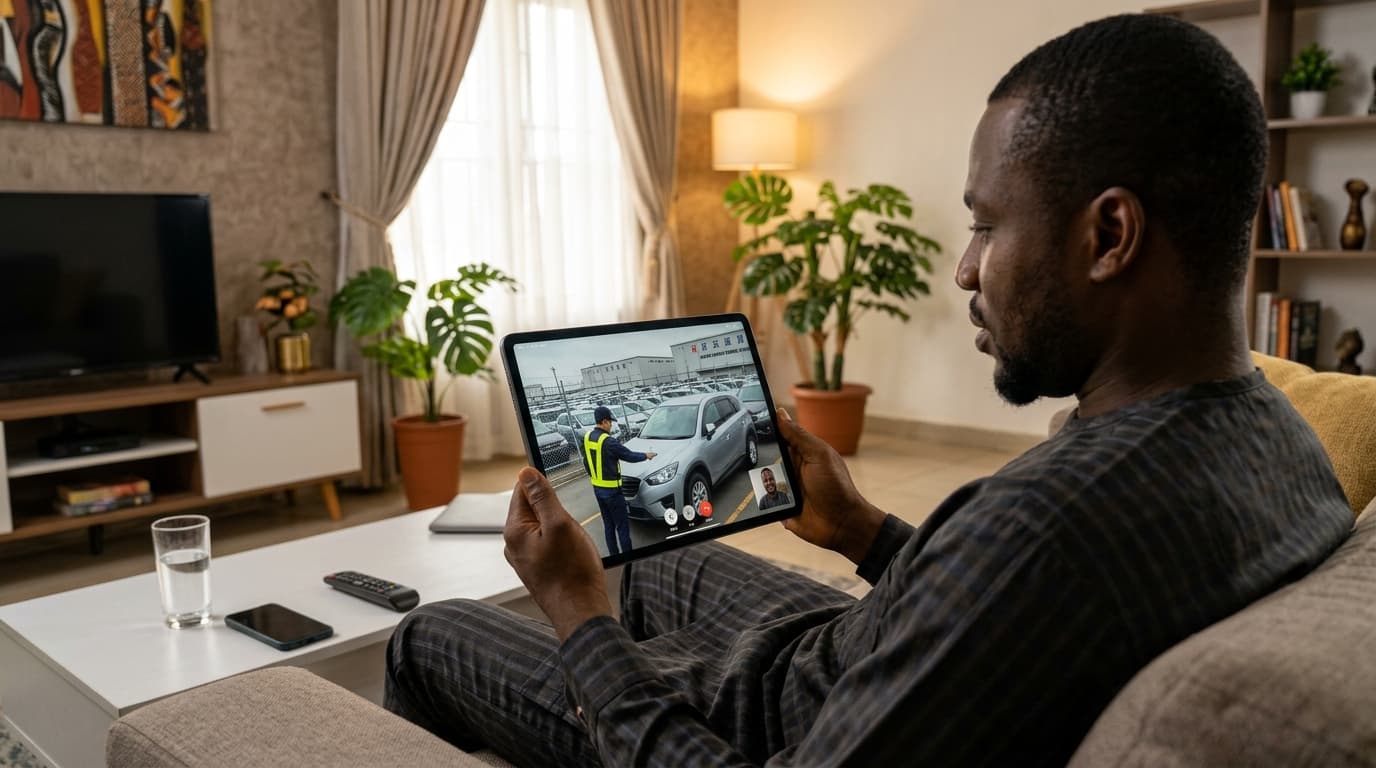
Additionally, if you want to avoid the stress of arranging inspections, verifying vehicle conditions, and worrying about hidden defects, AFRIKARS makes the process easier for you. We help you review important vehicle information, including history reports, dealer walkthrough videos, and listing photos, before you authorise a purchase. Our team also checks available vehicle information to help you make a more informed decision and reduce the risk of costly surprises.
Ready to buy a car from the USA without navigating every step alone? Visit AFRIKARS to explore available vehicles, review the buying process, and understand your estimated landed cost. Let us help you navigate vehicle sourcing, shipping, and customs clearance to Nigeria with greater transparency and confidence.
Sending a direct wire transfer or cash upfront to an unverified overseas seller is the fastest way to lose your money.
- Use Independent Escrow Services: Utilize verified international escrow platforms like Escrow. An escrow service holds your funds securely in a neutral account and will not release the payment to the seller until the car is officially delivered to your shipping provider and approved by you.
- Avoid Shady Alternatives: Never pay an international seller using gift cards, unregulated digital currencies, unverified online payment links, or direct western transfers.
- Consider Managed Phased Services: Alternatively, work through established car import platforms or clearing firms that offer phased, milestone-based payment structures, where you pay small percentages for sourcing, shipping, and customs clearing only after each phase is independently verified.
Request written confirmation of the vehicle's agreed price, condition, shipping arrangements, estimated costs, payment terms, and documents you will receive. Clarify what happens if the vehicle's condition differs from the listing or shipping is delayed. Read the applicable terms before authorising payment.
If you are importing a car from the United States to Nigeria, AFRIKARS can simplify the process by providing vehicle information before purchase and coordinating purchasing, shipping, customs clearance, and delivery.
Likewise, AFRIKARS holds customer funds in secure escrow and releases them in stages as the relevant purchase steps are verified and completed. You can review available vehicle information before authorising a purchase, while the platform coordinates the buying, shipping, customs clearance, and delivery process for vehicles sourced from the United States and delivered to Nigeria.
Also Read: VIN Decoder: How to Decode a Vehicle VIN Number Easily
When seeking information on how to buy a car from overseas, you need to understand the necessary documents to verify. These documents can help you avoid fraudulent sellers, resolve disputes, and prepare for customs clearance when the vehicle arrives in Nigeria.
Here are the key documents to request:
- Vehicle title or ownership document: This establishes the vehicle's ownership and helps verify that the seller can transfer it to you. Check the title status for any restrictions or salvage branding.
- Bill of sale or purchase invoice: This records the agreed purchase price, purchase date, vehicle details, and seller's information. Keep a copy for your records and importation process.
- Vehicle history report: Request a report showing available accident history, title records, odometer readings, and other relevant information.
- Vehicle identification number (VIN): Obtain the VIN and compare it against the vehicle, title, and other documents to confirm that the details match.
- Vehicle condition report: If you are purchasing an auction vehicle, request the available auction condition report and photographs. For a dealer vehicle, ask for inspection details and clear photographs of its condition.
- Bill of lading: This shipping document records key information about the vehicle and its sea transport. You will generally need it as part of the shipping and clearance documentation.
- Customs clearance documents and proof of duty payment: Confirm which documents will be provided after the vehicle arrives and completes customs clearance in your destination country.
- Insurance documents: If you purchase marine insurance, retain the policy or certificate showing the cover and its terms.
If you purchase through AFRIKARS, the platform provides the vehicle title transferred from the seller to you, customs clearance papers, and proof of duty paid. We also coordinate the purchasing, shipping, and customs clearance process for vehicles sourced from the United States and delivered to Nigeria.
In learning how to buy a car from overseas, you need to understand that the advertised price of an overseas car is not necessarily the amount you will pay to get it home. Shipping, import duties, taxes, clearing fees, and other charges can significantly increase the final cost. Before choosing a vehicle, calculate its total landed cost so you can determine whether it fits your budget.
Use the following steps to estimate your expenses when importing a car:
Identify the car's purchase price in its currency and confirm the cost. If you are buying through an auction, account for any applicable auction fees and other purchase-related charges that are not included in the winning bid.
A car may need to travel from the seller or auction location to the departure port before it can be shipped to Nigeria. Your estimate should account for applicable inland transportation, export handling, and ocean freight charges. Shipping costs can vary depending on the vehicle's size, departure location, shipping arrangements, and prevailing freight rates. Request a current quote rather than relying on an old estimate.
Import duties and other charges can represent a significant portion of your total cost. The amount payable depends on the vehicle and the applicable Nigerian customs rules. Hence, check the current requirements and applicable rates before purchasing. Do not assume that two vehicles with different specifications will attract identical import charges.
Also Read: Car Import Duty in Nigeria | Rates, Costs & How It Works
Your budget should account for customs clearance, service fees, and transportation from the port to your final destination, where applicable. Ask for an itemised breakdown so you understand which services are included and which require separate payment.
Meanwhile, if you buy through AFRIKARS, we'll coordinate the customs clearance, purchasing, and shipping for vehicles sourced from the United States and delivered to Nigeria.
If you are paying for the vehicle in US dollars, use the applicable exchange rate to estimate the naira equivalent. Remember that exchange rates can change, so clarify the rate that will apply to your transaction and when currency conversion will take place.
Unexpected expenses can arise from changes in shipping costs, exchange rates, government requirements, or other factors outside your control. Therefore, keeping a reasonable reserve can help you manage these changes without disrupting your finances.
If you want to avoid juggling separate estimates from dealers, shipping companies, and clearing agents, AFRIKARS offers a more streamlined approach. Our marketplace displays an estimated landed cost covering the vehicle, shipping, customs duties, and service fee, with delivery to your door in Nigeria. You can review the itemised cost before authorising the purchase.
AFRIKARS aims to provide the full cost upfront, although government regulations and other external factors may sometimes affect the final amount. For more information, you can sign up and read our FAQs here.
Knowing how to buy a car overseas can help you access more vehicle options and potentially find a car that suits your budget and preferences. Follow these steps to make the process easier and reduce the risk of costly mistakes.
- Choose a Car and Verify the Seller: Identify your preferred make, model, year, and specifications. Research the seller and verify their legitimacy before making any payment.
- Check the Vehicle's History and Condition: Obtain the Vehicle Identification Number (VIN) and review the available vehicle history report, photographs, and inspection records.
- Calculate the Total Importation Cost: Consider the vehicle's purchase price, shipping, customs duties, taxes, service fees, and delivery charges. Request an estimate of the total landed cost so you can determine whether the vehicle fits your budget.
- Arrange Payment, Shipping, and Documentation: Confirm the payment terms and obtain the necessary purchase documents. Arrange international shipping and verify the current import requirements for Nigeria, including the documents needed for customs clearance.
- Clear Customs and Receive Your Vehicle: Once the car arrives in Nigeria, complete the applicable customs procedures and pay the required duties and charges. Obtain your clearance documents and arrange delivery to your destination.
Also Read: Used Cars for Sale in USA Under $5,000: Buying Guide
If you want to buy a car from overseas without coordinating multiple sellers, shipping agents, and customs intermediaries yourself, AFRIKARS offers an end-to-end vehicle purchasing and importation service for cars sourced from the United States and delivered to Nigeria.
Instead of navigating every stage independently, you can browse available vehicles on the AFRIKARS marketplace or request a specific make, model, or specification. Before authorising a marketplace purchase, you can review the available vehicle history report, dealer walkthrough video, and listing photographs to help you assess the car.
Here is how AFRIKARS helps simplify the process:
- Vehicle sourcing: Browse available cars from US dealers or explore auction vehicles. You can also request a particular make or model.
- Vehicle information: Review the available history report, photographs, and dealer walkthrough video before authorising a marketplace purchase.
- Protected payments: Customer funds are held in secure escrow and released in stages as the relevant purchase steps are verified and completed.
- Transparent cost estimates: Review the estimated landed cost, including the vehicle, shipping, customs duties, and service fee, before committing.
- Shipping coordination: AFRIKARS coordinates the vehicle's journey from the seller to the port and onward to Nigeria, with progress tracking through its app.
- Customs clearance: AFRIKARS acts as the importer of record and handles customs clearance, including the payment of applicable duties on your behalf.
- Door delivery: Once the vehicle has cleared customs, AFRIKARS arranges delivery to your door in Nigeria.
- Vehicle documents: You receive the vehicle title transferred from the seller to you, customs clearance papers, and proof of duty paid.
You do not have to manage every stage of importing a car on your own. Visit AFRIKARS to browse available US vehicles, review estimated landed costs, and explore a simpler way to buy, ship, clear, and receive your next car in Nigeria.
The delivery time depends on the seller's location, vehicle availability, export procedures, shipping schedules, customs clearance, and final delivery arrangements. Typically, it takes 4 to 8 weeks (about 1 to 2 months) from the time of purchase to receive a car imported from overseas to Nigeria.
Yes. You can purchase a car remotely through a vehicle marketplace like AFRIKARS or an import service that manages the transaction on your behalf.
Document the damage immediately with photographs, keep the shipping and purchase documents, and notify the seller, shipping provider, or insurer as appropriate. However, your options depend on the cause of the damage, the purchase agreement, and any applicable insurance coverage. If you purchase through AFRIKARS, optional marine insurance is available, and the platform documents the vehicle at pickup and at the port to help establish whether damage occurred during transit.
Yes. Imported vehicles are generally subject to applicable Nigerian customs duties, taxes, and levies, although the exact charges depend on the vehicle and the regulations in force.
Tracking depends on the service provider and the shipping arrangements. Some import services provide updates as the vehicle moves from the seller to the port, through international shipping, and into customs clearance. For example, AFRIKARS allows customers to track the stages of their purchase through its app, providing visibility into the vehicle's progress until delivery.