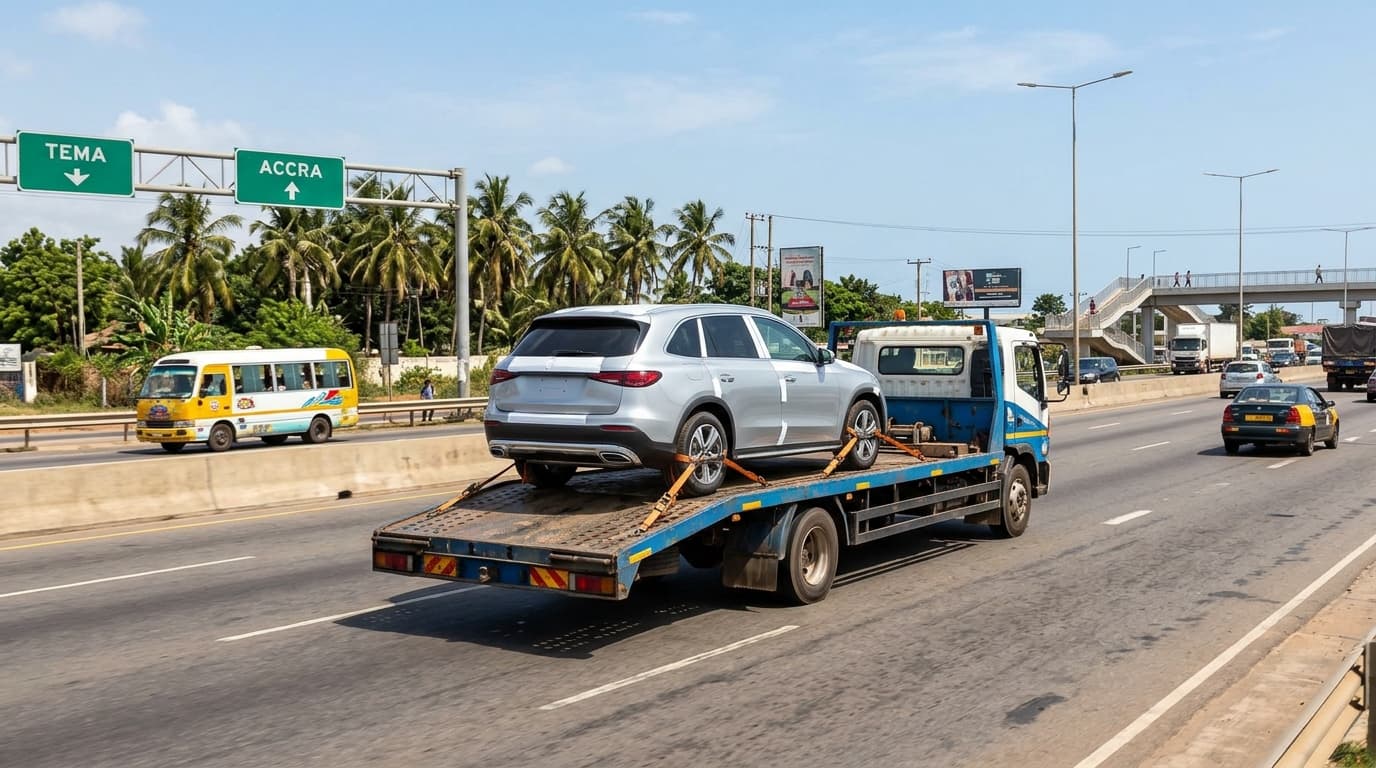
Shipping a car from the USA to Ghana can seem like a great deal until unexpected charges start adding up. If you're researching car shipping to Ghana, you need to look beyond the vehicle's advertised price and ocean freight. Import duties, port charges, customs clearance, and other expenses can significantly affect how much you eventually spend.
Imagine finding your dream Toyota, Honda, or SUV at an attractive price, only to discover that getting it cleared and delivered in Ghana costs far more than you anticipated. The Ghana Revenue Authority (GRA) provides a vehicle-duty calculation system that uses details such as the VIN, make, model, and year to help importers estimate their likely customs charges. Checking these details before making a purchase can help you plan your budget more realistically.
At AFRIKARS, we believe that access to accurate information helps people make smarter vehicle-purchasing decisions. This guide will help you understand the process before committing your money. Here's what you'll learn:
- How much it may cost to ship a car to Ghana.
- The steps involved in purchasing and shipping a vehicle from the USA.
- How long shipping and delivery may take.
- The customs duties, documents, and vehicle restrictions you should check before shipping.
The cost of car shipping to Ghana depends on the vehicle's size, the US departure port, the shipping method, and the charges you must pay when the vehicle arrives. If you're importing a used Toyota, Honda, Mercedes-Benz, or SUV from the United States, you should calculate the total import cost rather than focus on ocean freight alone.
According to alltransportdepot, a 20-foot container shipment from the USA to Tema is about $2,900–$4,700, while a 40-foot container can cost around $4,700–$7,200. These are indicative container freight figures, not guaranteed prices for every vehicle shipment. The final quote will depend on the route, carrier, shipping arrangement, and services included.
Also Read: VIN Decoder: How to Decode a Vehicle VIN Number Easily
Typically, the cost of car shipping to Ghana depends on several logistical, vehicle-specific, and regulatory factors. Below is a closer look at these factors:
- RoRo (Roll-on/Roll-off): The most common and economical option for standard, operable vehicles. Cars are driven directly onto the cargo vessel.
- Container Shipping: More expensive (often 20% to 40% higher), offering extra protection for high-value or electric vehicles, or allowing you to pack personal goods inside (Full Container Load [FCL] or Less than Container Load [LCL]).
Sedans and small cars take up less space and cost less to ship. Larger vehicles like SUVs, pickup trucks, and vans take up more floor and cubic space on the vessel, increasing freight charges.
- Distance to Port: The farther your departure point is from the origin shipping port, the higher the domestic ground transport (flatbed or tow truck) cost will be before the car even hits the ocean.
- Origin Port Choice: Major departure ports (such as New York, Baltimore, or London) offer more competitive shipping rates than smaller regional ports.
- Running Cars: Vehicles that start and drive under their own power are cheaper to load via RoRo.
- Non-Runners / Salvage Cars: Cars that do not move require special equipment like forklifts or cranes to load, which adds extra handling fees.
- Peak Seasons: Shipping rates often spike during high-demand periods, such as summer months or year-end holiday seasons.
- Auction & Trade Flow: High activity at major auto auctions can tighten carrier space and influence spot pricing.
- CIF Value Calculation: Import charges in Ghana are calculated based on the Cost, Insurance, and Freight (CIF) value, combined with engine capacity (cc) and fuel type. You can check official rates using the Ghana Revenue Authority Vehicle Importation Guide.
- Vehicle Age Penalties: Ghana applies strict tax pressures or overage penalties on vehicles older than 10 years.
- Port and Clearance Fees: Arriving at major ports like Tema or Takoradi involves terminal handling charges, ICUMS/customs processing fees, and documentation costs managed through a clearing agent.
Also Read: American Car Dealers in USA | How to Buy Cars for Export
Shipping a car to Ghana involves more than purchasing a vehicle and booking a vessel. The Ghana Revenue Authority's official Vehicle Importation and Clearing Guide explains that importing a vehicle involves purchasing, shipping, and clearing it after arrival.
Follow these steps to organise your shipment:
Start by identifying the vehicle you want to import. You can explore dealership listings or vehicle auctions, but do not base your decision on the advertised price alone.
Before making payment, review the available vehicle information and confirm that the vehicle meets Ghana's current import requirements.
Check the following details:
- Make, model, and year of manufacture
- VIN and available vehicle-history information
- Mileage and service history, where available
- Accident, flood, or structural damage records
- Title status and ownership documents
- Running condition and any known mechanical issues
Once you identify a suitable car, request a quote from a shipping company or vehicle-import service provider. Provide the vehicle details, its current location, your preferred departure port, and the destination port in Ghana. Ask the provider to itemise the costs rather than giving you a single unexplained figure. AFRIKARS also offers a landed cost calculator that would help you determine the cost of shipping and delivery.
Similarly, your quote should clarify whether it covers:
- Inland transportation to the US port
- Export documentation and processing
- Ocean freight
- Shipping insurance, if selected
- Destination charges
- Customs clearance
- Delivery after clearance
Before the vehicle leaves the United States, the exporter must comply with the applicable US Customs and Border Protection (CBP) requirements.
According to US Customs and Border Protection, exporting a used vehicle generally requires the exporter to submit the relevant documentation to the designated port at least 72 hours before export.
For a US-titled vehicle, the required documents include the original certificate of title or a certified copy, together with two complete copies. The vehicle must also be presented for examination and VIN verification. At AFRIKARS, we have a VIN Checker service that would ensure you get the basic information you need about any car.
After completing the necessary purchase and export arrangements, the vehicle must reach the designated US departure port.
Depending on your agreement, the shipping company may collect it from the dealer, auction yard, or another location. The provider then coordinates the required export procedures and vessel booking. You should also establish who is responsible for communicating delays or changes to the schedule.
Also Read: Used Cars for Sale in USA Under $5,000: Buying Guide
While the vehicle is in transit, organise the documents needed for customs clearance. The GRA identifies the vehicle's title and bill of lading or waybill among the relevant documents. You should confirm the complete requirements for your particular shipment with Ghana Customs or a qualified clearing agent.
At AFRIKARS, we bring the major stages of shipping cars to Ghana into one coordinated process. We purchase your chosen vehicle from a dealer or auction on your behalf, arrange transportation and shipping, handle customs clearance, and coordinate delivery to your door in Ghana.
For partnership and more information about AFRIKARS, reach out to our team **here**.
When the vehicle arrives at the destination port, follow the applicable customs-clearance process. Pay the assessed duties, taxes, and relevant charges through the appropriate channels.
Once the authorities release the vehicle and you settle any outstanding port or service charges, arrange collection or onward delivery.
Before accepting the vehicle, check its condition and confirm that you have received the relevant clearance and shipping documents. Keep these records for registration and any future ownership or resale requirements.
Car shipping to Ghana from the USA can take several weeks, and the complete process may take longer once inland transportation, vessel scheduling, customs clearance, and final delivery are included. Your actual timeline depends on the departure port, shipping method, carrier schedule, documentation, and any delays along the route.
For example, some US East Coast services quote about 18–25 days, while other estimates for the same broad route are closer to five or six weeks. The guide also lists longer estimates for some Gulf Coast and West Coast routes.
Several issues can extend your vehicle's delivery timeline.
- Inland transportation in the USA: If the car is located far from the departure port, the shipping company must arrange inland transport before the vessel can take it. Collection schedules, distance, and transport availability can affect how quickly the vehicle reaches the port.
- Vessel schedules and departure dates: A vehicle may have to wait for the next available sailing. The time between booking and departure can therefore add to the overall timeline, even when the actual sea journey is relatively short.
- Export documentation: Errors or missing documents can delay export processing.
- Customs clearance in Ghana: Arrival at Tema does not automatically mean the vehicle is ready for collection. Customs assessment, payment of duties and taxes, document verification, inspections where applicable, and port-release procedures can all affect the final delivery date.
- Regulatory or operational changes: New or revised import requirements may affect the documents, checks, or procedures that apply to a vehicle.
Also Read: Car Shipping From USA to Nigeria: Cost, Time & Process
When shipping a car to Ghana, you must prepare the correct paperwork to avoid delays at the port. The Ghana Revenue Authority identifies the vehicle's title and bill of lading or waybill as relevant documents for vehicle clearance.
Depending on the shipment and applicable procedures, you may need:
| Document | Why you need it |
|---|---|
| Vehicle title | Helps establish the vehicle's ownership and supports the import-clearance process. |
| Bill of lading | Records the shipment and identifies the cargo and shipping arrangements. |
| Purchase invoice | Provides details of the transaction and the vehicle purchased. |
| VIN or chassis number | Identifies the vehicle and supports customs valuation and verification. |
| Customs declaration | Provides information required for customs assessment and clearance. |
| Import permits or other approvals, where applicable | Demonstrates compliance with requirements for vehicles subject to specific controls. |
| Proof of payment of duties and taxes | Helps demonstrate that the assessed customs charges have been settled. |
The Ghana Revenue Authority's general import procedures also list documents such as an attested invoice, packing list, Import Declaration Form, taxpayer identification details, and relevant regulatory permits for applicable imports.
Meanwhile, not every item on the general list necessarily applies to every vehicle shipment, so confirm the specific requirements with Ghana Customs or a qualified clearing agent.
At AFRIKARS, we are committed to helping people make informed vehicle-purchasing decisions. Our current service enables customers to purchase vehicles from US dealers and auctions, arrange shipping and customs clearance, and receive delivery across the globe. Our mobile app also provides updates on the vehicle's progress through the process.
If you intend to ship a vehicle directly to Ghana today, you can explore **AFRIKARS**. You can also reach out to our team for more information on how to get started.
Yes. You can ship a vehicle purchased from a US auction to Ghana, provided you complete the required export procedures and the vehicle meets Ghana's import requirements.
Yes, but the Ghana Revenue Authority requires individuals who want to clear vehicles without an agent to register with its Customs Division and obtain the necessary approval to act as a clearing agent. If you do not have that approval, consider using a qualified clearing agent to handle the customs declaration, duty payment, and vehicle-release process.
Ghana generally prohibits the importation of right-hand-drive vehicles unless the Minister grants the required approval. The Ghana Revenue Authority explains that a special dispensation may apply in certain circumstances. Therefore, confirm the vehicle's eligibility with the relevant authorities before purchasing or shipping it.
AFRIKARS currently helps customers purchase vehicles from US dealers and auctions, arrange shipping and customs clearance, and receive delivery in Nigeria. If you plan to import a car into Ghana now, AFRIKARS can handle the process from purchase, shipping, and clearance to delivery.