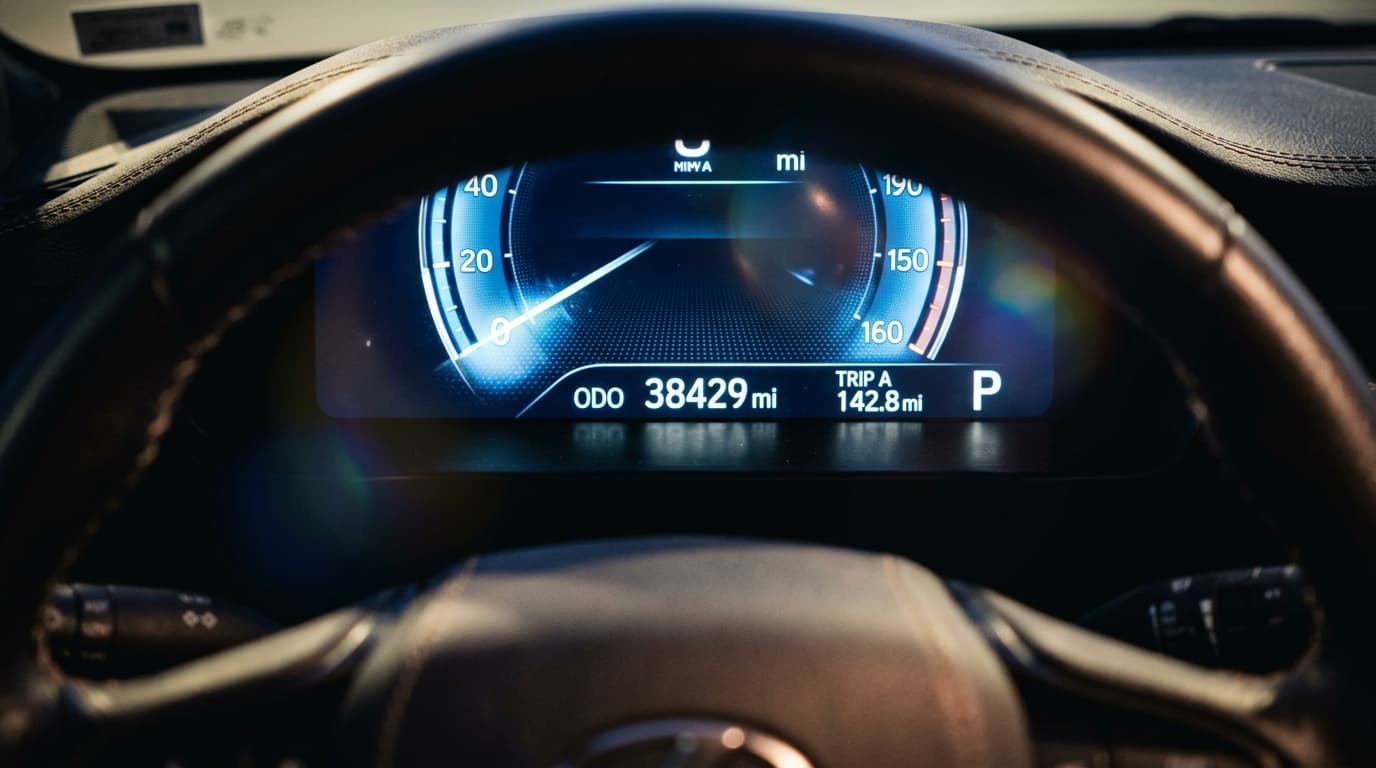
A low odometer reading makes any used car look like a dream. The seats look fresh, the price looks fair, and the seller swears the car drove only 60,000 miles. But what if the real number sits closer to 160,000? That gap can cost you thousands, and you may never notice until the repair bills start.
This risk explains why smart buyers always check mileage before they pay. Carfax research indicates that “more than 2.45 million vehicles on the road have rolled-back odometers, a whopping 14% increase from the previous year”. Carfax also estimates that “consumers lose an average of $3,300 in value from unknowingly buying a car with a rolled-back odometer, and that doesn’t include unexpected maintenance costs”.
Nigerian buyers face the same danger, especially when they import cars from the US and cannot touch the car first. In this guide, you will learn eight practical ways to check mileage, spot the warning signs of tampering, and read a car’s records with confidence. You will also see how AFRIKARS helps you review a car’s mileage and history before you spend a naira on shipping. Read on and protect your money.
Also Read: Cost of Clearing a Car in Nigeria: Fees & Import Charges
Mileage shapes price, wear, and trust. When you check mileage properly, you protect yourself in five ways:
- Price: Carfax compared two 2018 Ford F-150s, one with 50,000 miles and one with 150,000 miles. The value gap reached $10,300. A fake low reading can therefore wipe out your savings.
- Reliability: Engines, gearboxes, brakes, and suspension parts wear with distance. A car with hidden miles breaks down sooner than you expect.
- Maintenance planning: Service schedules follow mileage, so a wrong reading makes you skip key repairs or miss them entirely.
- Resale value: When you sell, the next buyer will check mileage too. A flagged record cuts your price.
- Legal safety: Tampering with an odometer breaks the law in the US, and the Truth in Mileage Act made odometer fraud a felony.
The problem has a long history. An older NHTSA study, published in 2002, estimated a 3.47% chance that a vehicle gets its odometer rolled back at some point in its first 11 years. It also put the cost to US consumers at more than $1 billion per year. Newer data shows the trouble has not gone away.
Odometer rollback, also called “clocking,” means altering a car’s recorded distance so the display shows fewer miles than the car actually drove. Sellers do it to raise the asking price.
Old mechanical odometers show visible signs of tampering, such as misaligned digits. Digital odometers look safer, yet they carry their own weak spots. Many modern cars store mileage in the engine control module, which makes manipulation harder but not impossible. Sellers even sell digital odometer calibrators online, and some buyers use them for fraud despite the sellers’ disclaimers.
Scammers also target paperwork. A washed title may carry a reset mileage figure, and a forged title may show a false number. For this reason, you should never trust a single source. A believable mileage story holds together across the dashboard, title, history report, service papers, and physical wear.
Also Read: Tokunbo Cars in Nigeria | Prices, Buying Tips & More
Start with a simple benchmark. Americans drove an average of 13,930 miles per year-,Americans%20drove%20an%20average%20of%2013%2C930%20miles%20per%20year%20over%20the%20last%20decade,-.%20But%20a%20driver%E2%80%99s) over the last decade. Average annual mileage has stayed between 13,000 and 15,000 since 1993. Use that figure for a rough sanity check:
| Car Age (2026) | Approximate Model Year | Typical Miles | Approximate Kilometres |
|---|---|---|---|
| 3 years | 2023 | About 40,000 | About 65,000 |
| 5 years | 2021 | About 67,000 | About 108,000 |
| 8 years | 2018 | About 108,000 | About 174,000 |
| 10 years | 2016 | About 135,000 | About 217,000 |
Treat these numbers as a guide, not a rule. A former rental or ride-hailing car may drive far more, and a second car in a family may drive far less. Still, a ten-year-old car with 25,000 miles deserves extra questions. One consumer guide also warns that exceptionally low mileage for a model year calls for a thorough tampering check.
US cars usually show miles, while Nigerian drivers think in kilometres. Multiply miles by 1.609 to convert them. For example, 100,000 miles equal about 161,000 kilometres.
No single test proves the truth. Combine several methods, and trust the pattern they form.
Start with the display. On mechanical odometers, look for misaligned numbers or gaps between digits. On digital displays, watch for flickering, since someone can manipulate electronic readings. Also scan the instrument panel for scratches, loose screws, or gaps around the cluster. These marks can show that someone removed the cluster.
A car’s body tells its own story. Check the steering wheel, driver’s seat, gear lever, and pedals first, because the driver touches these parts constantly. Heavy wear on them contradicts a low reading. Next, look at the tyres. A car with very low mileage usually still wears its original tyres.
One caution applies here. A worn steering wheel or new pedals alone do not prove a rollback. Owners replace parts for many honest reasons, so treat wear as a clue, not a verdict.
In the US, sellers record the odometer reading on the title at each transfer. Ask for the original title, not a copy, and read the mileage closely. If the seller cannot produce a title, treat that as a deal-breaker.
Pay attention to odometer brands too. Titling authorities use labels such as “Not Actual Mileage,” “Exceeds Mechanical Limits,” and “Odometer Discrepancy” when they know or suspect that the reading does not match the true mileage.
Records often reveal what the dashboard hides. Take the 17-character VIN from the dashboard or the door jamb sticker, and run it through a history service. A good report lists dated mileage readings from title events, inspections, and service visits. Compare them in order. Mileage should climb steadily, never drop, and never jump unnaturally. Also watch for gaps longer than two years with no reading.
Remember the limits. Reports only contain mileage that someone reported to a data source, so a car with a thin record offers fewer checkpoint. At Afrikars, we provide a free public VIN decoder where users can enter a VIN and retrieve information reported by the manufacturer.
Also Read: VIN Decoder: How to Decode a Vehicle VIN Number Easily
Service paperwork gives you real-world checkpoints. Each receipt should show a date and a mileage figure. Compare those numbers with the dashboard, and look for “next service” stickers and oil change labels in the door jamb or under the hood.
Records can lie, though. Forgers can fake service papers, so call the shop that supposedly serviced the car and confirm the visit.
Modern cars keep mileage in more than one place: the dash and the control modules. Scammers sometimes alter the dash and forget the module, which means a mechanic can pull the stored data and compare the two numbers. Skilled fraudsters can alter several modules, so treat a clean scan as one more clue rather than final proof.
Independent records strengthen your case. Technical inspection reports, repair shop records, and insurance files often carry mileage entries. The more independent records match, the more confidence you can have. For auction cars, compare the auction photos with the listing mileage, and look for earlier sale photos of the same VIN.
Stop and investigate when you notice any of these signs:
- The mileage looks far too low for the car’s age and condition.
- The steering wheel, seat, or pedals show heavy wear that clashes with the reading.
- The title shows an odometer brand, or the seller cannot produce a title.
- Service records contain gaps, or the mileage drops between entries.
- The instrument panel shows scratches, loose screws, or flickering digits.
- The seller refuses an independent inspection or a history report.
- The price sits far below similar cars with no clear reason.
- The seller rushes you to pay before you finish your checks.
One red flag does not prove fraud. Still, resolve every concern before you send money.
Import buyers face a special challenge. You rarely stand next to the car, so you must rely on records, photos, and reports. Follow these steps:
- Run the VIN before you commit. A history check shows mileage entries, title brands, and past sales.
- Compare every photo. Match the dashboard photo in the listing with auction photos and walkthrough videos. The numbers should line up.
- Ask for fresh dashboard photos. Request a picture with the ignition on, and ask again at later stages. Matching numbers across dates add confidence.
- Read the title status. Look for odometer brands and other flags before you bid.
- Convert and compare. Turn miles into kilometres, then judge the number against the car’s age using the table above.
- Weigh mileage against landed cost. A cheap car with very high mileage can lose to a pricier car with honest, lower miles once shipping and duty enter the picture.
Auction cars need extra care. They sell “as is,” with the auction’s own photos, a condition report, and a VIN check you can run before you bid. Once you authorise an auction purchase, you accept the car’s condition, so finish your mileage review first.
Also Read: Cost of Cars in Nigeria | Prices by Type and Model Guide · AFRIKARS
Act calmly, and gather evidence:
- Stop the purchase. Do not pay a deposit while doubts remain.
- Document everything. Photograph the dashboard, take screenshots of listings, and save your messages with the seller.
- Confirm the facts. Contact the shops named in the service records, and request a second history report.
- Renegotiate or walk away. If two clues point the wrong way, price the car as a high-mileage vehicle or leave the deal
- Report it. For US cars, consumers can report suspected odometer fraud to the state attorney general, and large-scale fraud to the National Highway Traffic Safety Administration.
- Trusting the dashboard alone: The display forms only one piece of evidence.
- Skipping the history report: Records catch what eyes miss.
- Believing a clean report means a clean car: Reports show only what someone reported.
- Accepting photocopies: Always ask for the original title and service papers.
- Ignoring tyres and pedals: Wear often exposes the truth first.
- Letting a low price blind you: A bargain with a suspicious reading usually costs more later.
- Rushing the decision: Pressure serves the seller, not you.
At AFRIKARS, we help you check mileage with clear information and careful steps before you commit. Every marketplace listing shows the car’s mileage up front, so you can compare cars quickly. For example, listings on our site display mileage figures that range from under 100 miles on new stock to more than 190,000 miles on older cars, each next to its price and estimated Lagos cost.
Here is how we support your review:
- Walkthrough video and history report: On the marketplace, you review the dealer’s walkthrough video and the vehicle history report before you authorise a purchase. Our team checks both first, and you also see the listing photos.
- VIN Check: Our VIN Check costs ₦8,500 per report, and anyone can buy one with a card, no account needed. Verified customers receive 3 free checks at the point of purchase.
- Auction transparency: Auction cars come with the auction’s photos, a condition report, and a VIN check you can run before you bid.
- Escrow protection: A licensed partner holds your money and releases it in stages, so you do not hand over full payment before the process moves forward.
- Photos at pickup and port: We photograph your car at pickup and again at the port, which documents its condition in transit.
- Landed cost upfront: Each listing shows the estimated landed cost, so you can weigh mileage against the full price. Use the cost calculator to compare options.
A reminder: no report guarantees perfect accuracy. Review the history, read the title status, and hire an independent inspector when you can. If you want a specific model with verified mileage, ask our Concierge team to source it, or contact us with your questions.
Also Read: Cars for Sale in Nigeria | Prices, Deals & Buying Tips · AFRIKARS
Combine several methods. Inspect the odometer, compare the car’s wear with the reading, review the title, run a VIN history report, check service records, scan the control module, and hire an independent mechanic. When the clues match, you can trust the number.
Yes. Digital odometers store mileage electronically, and sellers sell calibrators and software online that people misuse for rollbacks. Check the dash against records and module data.
No. Reports only contain mileage that someone reported to a data source, so a thin history gives you fewer checkpoints. Add a physical inspection.
Americans drove an average of 13,482 miles in 2022, and the yearly average has stayed between 13,000 and 15,000 since 1993. Use this as a rough benchmark, and remember that fleet and rental cars often drive more.
Yes. In the US, altering, resetting, or disconnecting an odometer with intent to misrepresent mileage breaks federal and state law, and odometer fraud counts as a felony under the Truth in Mileage Act.
Multiply the miles by 1.609. For example, 80,000 miles equal about 129,000 kilometres.
Yes. You see the mileage on every listing, review the dealer’s walkthrough video and history report on the marketplace, and run a VIN Check before you commit. Auction cars sell “as is,” so finish your review before you bid.
- Odometer Rollback Is On The Rise
- The Auto Channel, NHTSA odometer fraud study
- Insurify, average miles driven per year
- Texas DMV, odometer brands
- Jalopnik, how to tell if an odometer rolled back
- Automoblog, odometer rollback fraud
- Credit Acceptance, how to check mileage
- Car Checker VIN, rollback detection methods
- 1C5HZ, how to tell if mileage is real
- Autoistorija, spotting a clocked odometer
- Cartrade Exchange, spotting odometer fraud
- AFRIKARS FAQs