What if the car you just won at an American auction has hidden mechanical damage, an unsuitable title, or a history the seller didn't mention? This is one of the risks you must consider when exploring IAAI Nigeria and other US vehicle auction platforms. While auction listings can offer access to different vehicle options, a low bidding price does not always mean you're getting a bargain.
The challenge is that you cannot judge a vehicle's true condition by its auction price or a few attractive photographs. You need to examine other factors. You must also understand the auction's bidding rules and calculate the cost of transporting the vehicle from the United States to Nigeria. Otherwise, you could spend more than you planned before the car even reaches the port.
So, how do you separate a worthwhile auction deal from a costly mistake? AFRIKARS is committed to helping buyers access reliable vehicle-import information and make informed decisions. In this guide, our team explains how to buy cars from IAAI USA, verify vehicle information, estimate shipping and clearing costs, and protect yourself from common import scams.
IAA (often referred to as IAAI) stands for Insurance Auto Auctions, Inc., is a vehicle auction company that provides an online marketplace for buying used, damaged, and salvage vehicles. It connects vehicle sellers, including insurance companies, dealerships, fleet operators, and other organisations, with registered buyers. The platform allows buyers to search for available vehicles, examine listing information, and participate in auctions.
Also Read: Cars for Sale in Nigeria | Prices, Deals & Buying Tips
IAAI Nigeria allows buyers to purchase used, salvage, and other vehicles from the United States through online auctions. To participate, you can register as an Individual Public Buyer, or as a Licensed Business Buyer, or use a licensed broker.
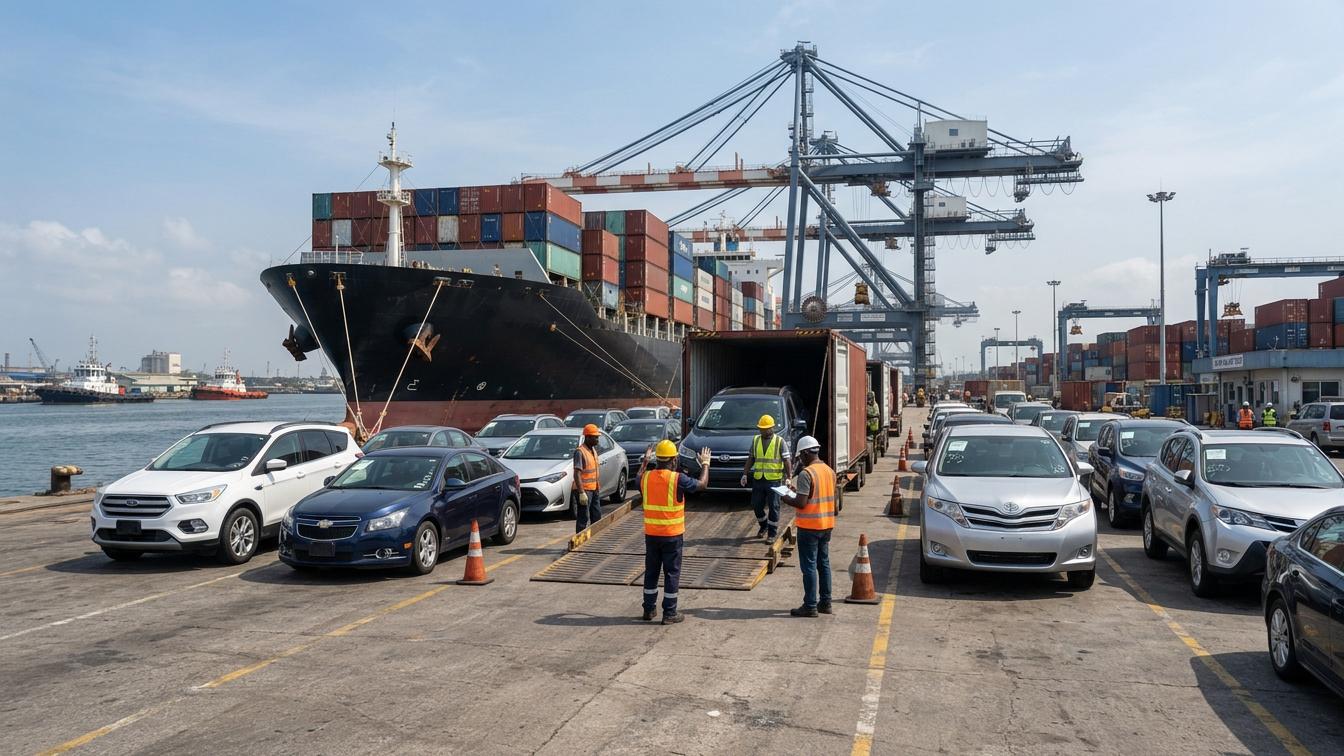
After registration or engaging a broker, you can browse available vehicles and place bids. If you win an auction, you must pay the vehicle invoice through an accepted payment method. The vehicle is then transported from the IAAI branch to a shipping warehouse in the United States for export processing and shipping to Nigeria.
Buying a car from IAAI Nigeria is beyond registering, placing a bid, and waiting for the vehicle to arrive. You must confirm that the vehicle is suitable for importation, understand the auction conditions, complete the payment, and arrange transportation from the United States to Nigeria.
Here is a practical process to follow.
- Choose a Buyer Type: You can register as a Public (Individual) Buyer (simplest if you are importing 1–2 cars) or a Licensed Business (Dealer). Submit a valid government-issued photo ID (international passport or driver’s license) and proof of address. Pay the $225 annual credit card membership fee via credit card, PayPal, or wire transfer.
Inspect the Car by checking the Vehicle Identification Number (VIN) via reports from AFRICARS VIN Checker service, review the damage type, and every other information that its provides. Pay for the vehicle within the auction's strict deadline (typically 2–3 business days) via international wire transfer or specialized USD payment platforms to secure your Bill of Sale and Title/Salvage Certificate.
Hire a U.S. licensed transport company or use IAA Transport to tow or haul the car from the IAA auction yard to an export port (such as Houston, Texas) within 2 to 5 days.
- RoRo (Roll-On/Roll-Off): Best for running/operable Left-Hand Drive (LHD) vehicles. It takes about 4 to 6 weeks and costs roughly $1,000 to $1,800.
- Container Shipping (20ft or 40ft): Best for non-running cars, luxury vehicles, or if you want to pack spare auto parts inside the vehicle. It takes about 5 to 7 weeks.
- Arrival Ports: Lagos (Apapa or Tin Can Island Port) or Onne Port in Port Harcourt. You'll be required to present documents like bill of Sale, original Title/Salvage Certificate, U.S. Export/EEI filing, and VREG/NICIS II registrations.
- Duties & Levies: Import duties are calculated based on the vehicle's CIF (Cost, Insurance, and Freight) value, including base auto duty, [National Automotive Council (NAC) Levy](https://www.vanguardngr.com/2023/10/customs-approaches-nac-to-review-levy-on-imported-vehicles/amp/), and VAT. Using a licensed Nigerian clearing agent is recommended to navigate port operations.
Also Read: VIN Decoder: How to Decode a Vehicle VIN Number Easily
If you want to purchase a vehicle from the United States but prefer not to coordinate every stage yourself, AFRIKARS offers a structured US-to-Nigeria import service.
We help customers purchase vehicles from US dealers and auctions, arrange transportation and shipping, handle Nigerian customs clearance, and coordinate delivery to their doorsteps. You can also receive progress updates through the AFRIKARS mobile app.
Rather than treating the auction price as the complete cost, you can explore available vehicles on **AFRIKARS** and review their estimated landed costs before authorising a purchase.
The cost of buying and importing a car from IAAI to Nigeria depends on the vehicle's location in the US, its purchase price, auction fees, engine capacity, and the prevailing exchange rate used by the Nigeria Customs Service (NCS). Generally, the total cost to buy and import a car from IAAI Nigeria ranges between $7,000 and $15,000+ above the winning auction bid. Below is the cost breakdown
Cost Breakdown
To understand where your money goes, the process is split into five distinct spending phases:
| Phase | Estimated Cost Range (USD) | What It Covers / Notes |
|---|---|---|
| 1. Auction Fees | $600 – $1,500 | IAAI buyer's premium, gate fees, internet fees, and broker fees (if using an agent). |
| 2. US Inland Towing | $300 – $1,500 | Moving the car from the IAAI yard to the nearest US exit port (e.g., Texas vs. New York). |
| 3. Ocean Shipping | $1,200 – $2,500 | Roll-on/Roll-off (RoRo) or container shipping to Lagos (Tin Can/Apapa). |
| 4. Nigerian Customs Duty | $4,000 – $8,000+ | 20% Base Duty + 5% NAC levy + 7.5% VAT + other surcharges based on the vehicle's ex-factory value. |
| 5. Local Clearing & Reg | $500 – $1,000 | Clearing agent fees, terminal handling, VREG tracking, and delivery. |
- Registration: A public buyer account costs $225 annually. If you do not have a US dealer license, you will likely need a broker, who charges an additional $150–$400 to bid on your behalf.
- Buyer Premium: IAAI charges a sliding fee based on the vehicle’s final price. For example, a $5,000 winning bid might incur around $700–$900 in buyers' fees.
- Mandatory Extras: Expect a $95 gate/service fee, a $20 title fee, and a $30–$90 internet bidding fee.
- Inland Towing: This depends heavily on proximity to the port. Towing a car from an IAAI yard in New Jersey or Maryland to the port is cheap (~$300–$500). Towing from a landlocked state like Colorado or Texas can scale up to $1,200+.
- Ocean Freight: Shipping via RoRo (where the car is driven onto the ship) through carriers like Grimaldi usually costs $1,200–$1,800 depending on the car's size (SUVs cost more than sedans). Container shipping offers better security for high-end or non-driving cars but spikes costs to $2,000–$3,500+.
The most unpredictable element is the Nigeria Customs Service (NCS). Customs does not value the car based on your IAAI invoice; they value it based on their internal "ex-factory" price registry for that specific vehicle year and model.
The calculations use the following stack:
- Import Duty: 20% of the vehicle's calculated value.
- National Automotive Council (NAC) Levy: Reduced to 5% for used vehicles.
- Value Added Tax (VAT): 7.5%.
- Other levies: 7% Surcharge, 4% FOB levy, and ECOWAS tax (0.5%).
- **Green Tax**: An additional 2% to 4% surcharge is applied if the vehicle features an engine size over 2,000cc (2.0L).
At AFRIKARS, we make it easier to evaluate the financial commitment involved in importing a vehicle. Our marketplace provides estimated landed costs that account for the vehicle price, shipping, customs duties, and AFRIKARS service fee.
These estimates help you understand the potential total cost before authorising a purchase. However, they are not guaranteed final charges because customs assessments, regulations, and other external factors can affect the amount payable.
Also Read: Copart Nigeria: How to Buy Cars From Copart USA Safely
One of the most important steps when buying from IAAI Nigeria is checking the vehicle's condition before placing a bid. Auction vehicles may have accident damage, mechanical problems, flood exposure, missing parts, or title issues that are not immediately obvious from the listing photographs.
A low auction price does not necessarily mean that a vehicle is a good purchase. You need to understand what you are buying and estimate the potential repair expenses before committing your money.
Here are the checks to complete:
Start by reviewing all available photographs on the vehicle listing. Look at the front, rear, sides, interior, engine compartment, wheels, and visible damage areas. Similarly, do not assume that photographs provide a complete picture of the vehicle's condition. Some mechanical or structural problems may not be visible.
Pay attention to:
- Damaged bumpers, doors, fenders, and body panels.
- Broken windows, headlights, and mirrors.
- Signs of water exposure or corrosion.
- Deployed airbags and dashboard warning indicators.
- Missing components and visible structural damage.
- Differences between the vehicle's listed condition and what the photographs show.
Where available, examine the auction's condition report and other inspection information. Check the reported damage type, mileage, keys, engine status, transmission information, and other available details. Pay attention to descriptions such as front-end damage, rear-end damage, side damage, vandalism, and water or flood damage.
Also, understand the meaning of any condition labels. A vehicle described as having a particular type of damage may have additional problems that require independent inspection. IAA provides vehicle information and listing photographs to help buyers research vehicles before bidding. However, the information available for each vehicle may differ, and an auction listing should not be treated as a guarantee of mechanical condition.
A Vehicle Identification Number (VIN) is a unique 17-character code used to identify a vehicle. You can use it to investigate available information about the vehicle's identity, specifications, and history.
Before bidding, use the VIN to check available records for:
- Previous accident or damage records.
- Reported mileage discrepancies.
- Salvage or rebuilt title history.
- Flood or water damage records.
- Previous ownership and registration information.
- Outstanding recalls, where available.
You can also compare the VIN displayed on the listing with the VIN on the vehicle and its available documents. AFRIKARS provide VIN Checking services that help you to check the vehicle identity, history, and customs duty status.
The title is an important document because it provides information about the vehicle's legal status and may affect its export, registration, and future use. For example, a salvage title generally indicates that an insurer or relevant authority has classified the vehicle as a total loss under applicable rules.
Similarly, a rebuilt title may indicate that a previously branded vehicle has undergone repairs and met the relevant inspection requirements.
Title classifications and their legal implications vary by state. Therefore, confirm the specific title description and whether it is acceptable for export and import into Nigeria.
If you are uncertain about a vehicle's condition, consider arranging an independent inspection before bidding. A qualified inspector may identify damage or mechanical issues that are not obvious in the auction photographs.
At AFRIKARS, we encourage buyers to examine available vehicle information before making a purchase decision. Our marketplace listings may include vehicle photographs, dealer walkthrough videos, and available vehicle-history reports. For auction vehicles, buyers can review the available auction photographs, condition reports, and VIN information before authorising a purchase.
Our team also checks available vehicle information as part of the purchasing process. However, auction vehicles are sold on an as-is basis, so buyers should understand the condition information and associated risks before proceeding.
Also Read: Cost of Clearing a Car in Nigeria: Fees & Import Charges
Importing a vehicle involves several stages, and managing them independently can be demanding. You need to coordinate the seller, auction or dealer, transporter, shipping company, customs agent, and final delivery.
At AFRIKARS, we provide a coordinated US-to-Nigeria vehicle purchasing and import service. We help you explore vehicles from US dealers and auctions, review available vehicle information, and understand the estimated landed cost before authorising a purchase.
Once you proceed, we purchase the vehicle on your behalf, coordinate transportation and shipping, handle Nigerian customs clearance, and arrange delivery to your doorstep. You can also follow the vehicle's progress through our mobile app.
Our process includes escrow-based payments, with funds released in stages as the relevant steps are verified. This provides a structured payment process rather than requiring you to manage every transaction independently.
However, no purchasing or import service can eliminate every risk, particularly where auction vehicles are sold as-is. You should still review the available vehicle information, understand the purchase terms, and make an informed decision before proceeding.
For more information, you can visit our website. To become a clearing partner, you can reach out to us here.
No. IAA and Copart are separate vehicle auction companies. Both provide online platforms where eligible buyers can purchase used, damaged, and salvage vehicles. However, they have different registration requirements, bidding processes, fees, and auction terms.
Yes. IAA provides online auction services, allowing eligible buyers to search for vehicles and participate remotely.
Not automatically. A salvage vehicle may require repairs, documentation, and compliance with applicable import and registration requirements. Its title classification and condition may also affect whether it can legally be imported and registered. Confirm these details before purchasing.
Tracking depends on the auction broker, shipping company, or import service managing your purchase. Before proceeding, ask whether you will receive collection updates, shipping information, and clearance progress reports. At AFRIKARS, we provide customers with vehicle progress updates through our mobile app, allowing them to follow the import process.